XPeng's Brian Gu Sees Household Humanoids One to Two Years After Commercial Rollout
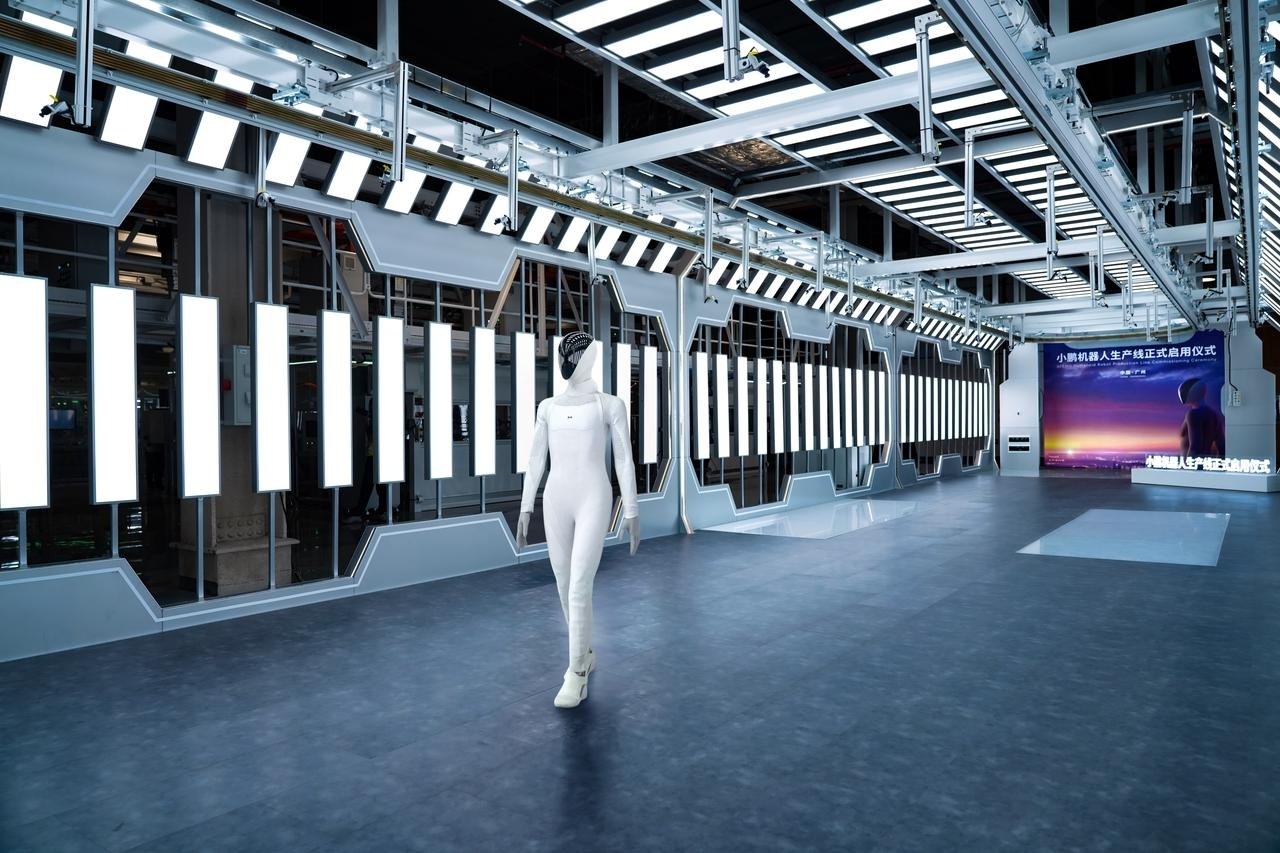
XPeng's Brian Gu told CNBC that household robots could follow one to two years after IRON proves itself in stores.
Humanoid robots could start moving into homes one to two years after they prove themselves in commercial settings, Brian Gu, co-president of XPeng, said in an interview with CNBC. “Maybe after successful deployment into commercial settings, maybe another one to two years, we can start thinking about deploying into home settings,” Gu said. “Technology is moving at a much faster clip.”
The clock starts with IRON's commercial rollout. XPeng plans to start mass production of the general-purpose humanoid in January 2027, train it as a store assistant in its retail locations in the first quarter, begin sales in the second quarter and deliver later in the year. IRON, unveiled at XPeng's AI Day in Guangzhou on November 25, has 76 degrees of freedom, a 21-degree-of-freedom dexterous hand and more than 1,500 tactile sensing points, running on the company's Turing Physical AI Architecture.
Gu was clear the home is a harder test than the store. A household robot has to work safely around elderly people, children and pets and react to emergencies, which raises the bar on battery power and performance consistency. The hardest engineering problem, he said, is multitasking: “doing a task while you're walking and answering questions at the same time... The model has to work in sync.”
The business case, in Gu's telling, is stronger than cars. Robotics will likely become a meaningful part of XPeng's business in two to three years, he said, with profitability coming as soon as next year. “It's much easier to be profitable for the robotics business than the autos business.” He expects to add investors after IRON's commercial launch next year; the robotics unit raised more than $900 million in August at a valuation above $6.3 billion.
On chips, Gu said XPeng's robotics work only needs the driver-assist chips the company already builds itself, limiting the impact of US restrictions on advanced Nvidia chip sales to China. “Right now we don't see any change to our supply chain, and also ability to have these chips.” The comments come as XPeng shares have fallen more than 55% this year and China's humanoid sector faces closer scrutiny of financing after Unitree's high-profile IPO and stock slump.