XPeng's IRON Takes the Stage at AI Day as Robotaxi Starts Driverless Rides
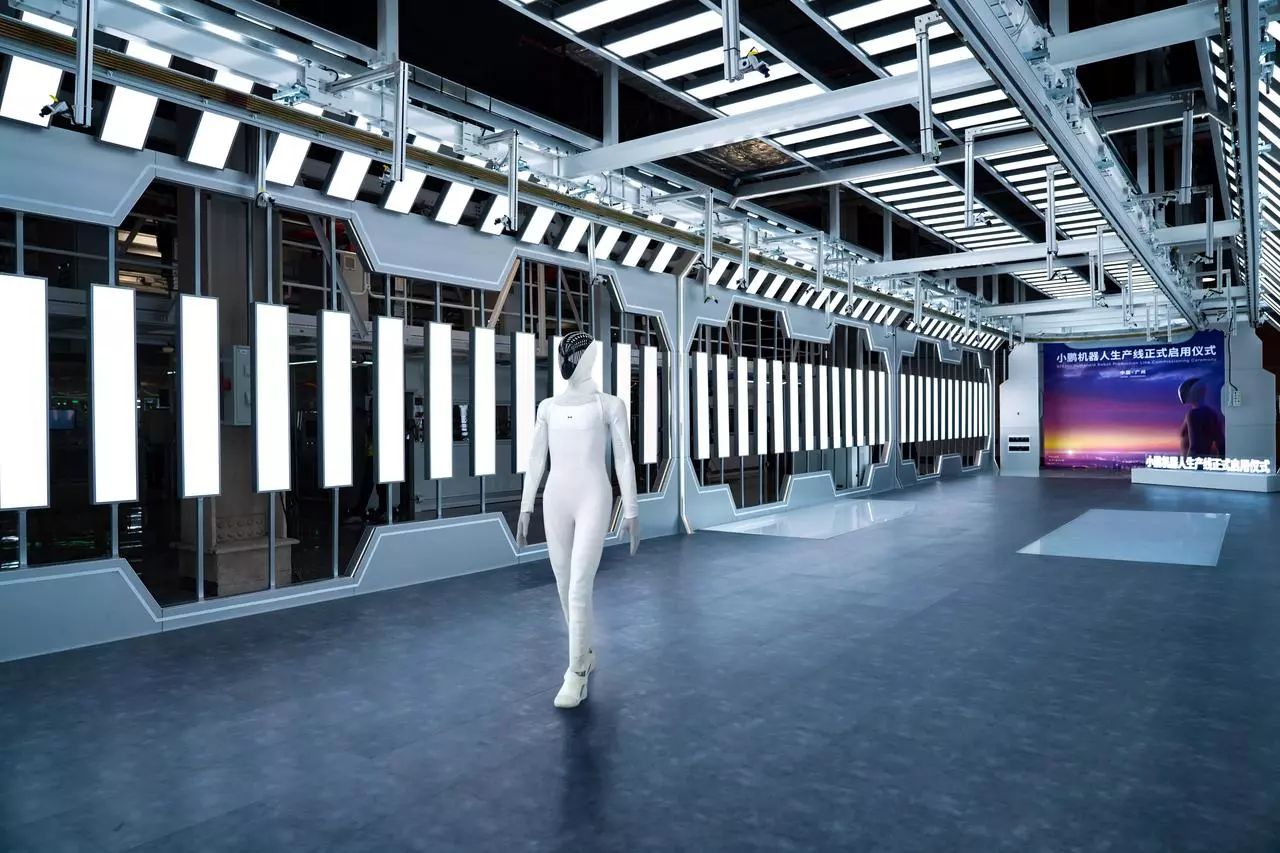
IRON addressed 2,000 people in two languages with no human in the loop, while XPeng's robotaxis began carrying passengers with empty driver's seats.
XPeng's humanoid robot IRON walked onto the stage at the company's AI Day in Guangzhou on November 25 and addressed an audience of more than 2,000 people in Chinese and English, microphone in hand. Joking that it was nervous but had no blushing function yet, the robot spoke, observed and answered in real time with no remote operator, XPeng said.
The appearance capped a year in which IRON moved from reveal to production line. The latest generation rolled off a newly commissioned line on September 8, and XPeng said in November that mass production would start at the end of 2026 or in January 2027, with deliveries to outside customers from the second quarter of 2027. The first units will go to XPeng's own stores and campuses.
IRON stands about 170 centimeters tall, with 76 degrees of freedom across its body and 21 in each hand. Three in-house Turing AI chips deliver up to 2,250 TOPS of computing power, running XPeng's Physical AI foundation model on the robot itself. XPeng has not announced a price, and no home version is on the schedule.
The same event marked a step forward for XPeng's robotaxi business, now called XPeng YOYO. Its Level 4 robotaxis have officially begun a driverless passenger-carrying experience, with no one in the driver's seat. The service runs on an invitation-code basis under cloud-based remote monitoring, and XPeng stressed it is still a demonstration operation, not full commercialization.
The robotaxi moved fast: its first mass-produced vehicle rolled off the line in May, employee testing began in July, driverless road testing started in August, and citywide Level 4 demonstration approval in Guangzhou followed on October 26. The operating vehicles run on the GX platform with four Turing chips and a second-generation vision-language-action model, at 3,000 TOPS. A first custom model for individual consumers, the YOYO-01, is planned for 2027.
A day before the event, XPeng unveiled WorldGPT, a single AI model designed to work across six kinds of machines: cars, boats, drones, single-arm robots, dual-arm robots and humanoid robots. The company said the model took 12 first-place results across public benchmarks and averaged a 95.2 percent success rate across 50 single-arm manipulation tasks. The second-generation VLA model behind its driving system is targeted for first global deliveries in the first half of 2027.