Xiaomi's World Model 2.0 Trains Cars and Robots on One Shared Simulator

Xiaomi's unified causal world model trains its driving system in cloud simulation — and posts a 75.0% score on a robot manipulation benchmark.
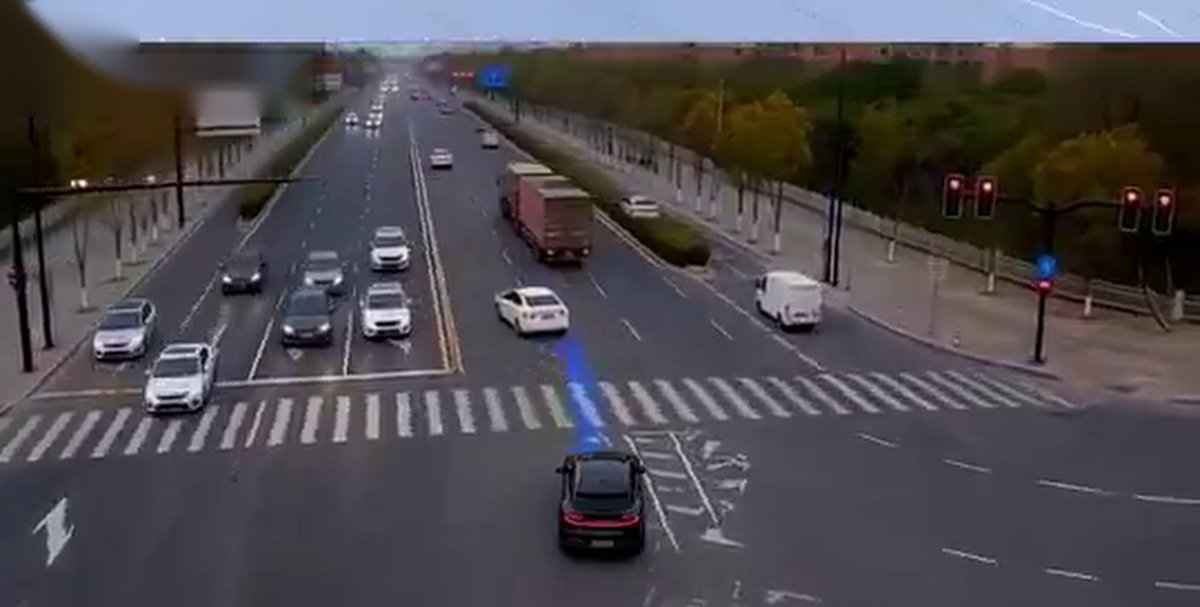
Xiaomi has released World Model 2.0, a unified causal world model that trains both its assisted-driving system and robot manipulation on the same cloud infrastructure. Announced on Friday, the model generates synthetic driving scenes and runs closed-loop simulation to train the company's HAD driver-assistance stack — and the same system takes robot arm states as input, a combination Xiaomi frames as one foundation for physical AI.
World Model 2.0 is a cloud-side training and simulation engine, not a feature running in the car. It is a streaming causal model built on View-Temporal Attention and multi-view rotary position encoding, with a WorldRec 2.0 module that reconstructs 3D scenes from multi-camera observations and holds them as memory while it generates what happens next. It accepts one to seven camera views and was trained on 12.6 million clips, spanning driving footage, robotics data and general video.
The driving results come from 1,000 test scenes in NAVSIM, the open driving benchmark. A driving policy trained with the world model in closed-loop reinforcement learning cut the collision rate to 0.4 percent, down from 1.2 percent for the strongest end-to-end baseline, while scenario completion rose to 96.3 percent from 95.2 percent. Xiaomi says the system has already delivered more than 200,000 synthetic clips for training perception models, and it reports top scores for video generation on PAI-Bench-G — 78.0 for driving scenes and 77.1 for robot scenes.
The robotics leg is what makes this more than a driving story. The same model conditions on a robot arm's action sequence and its URDF state to generate multi-view manipulation scenes, and a World Action Model built on its representations scored a 75.0 percent average success rate on LIBERO Plus, a manipulation benchmark, beating the Fast-WAM baselines it was compared against. The largest gains came when the scene layout, camera viewpoint or background changed — the distribution shifts that usually break imitation-learned policies.
The bet behind it is bigger than one driving system. Xiaomi is building a single physical-AI foundation for its cars and its robots — the same data factory feeding both, and by extension the phone-car-home ecosystem it has spent years assembling. Real driving footage goes in, 3D reconstruction and generative simulation multiply it into training data, and reinforcement learning turns it into driving policy.
None of this is proof on real roads yet. The numbers come from Xiaomi's own technical paper and release — a preprint, not peer-reviewed work — and from simulation and benchmarks, not from cars driving themselves through unscripted traffic. The test, as always, is how cleanly gains in the cloud simulator transfer to messy real-world roads, and whether the same model that scores on a manipulation benchmark can run a robot in a home.