UBTech, FAW-Volkswagen partner on humanoid robots for logistics and smart manufacturing
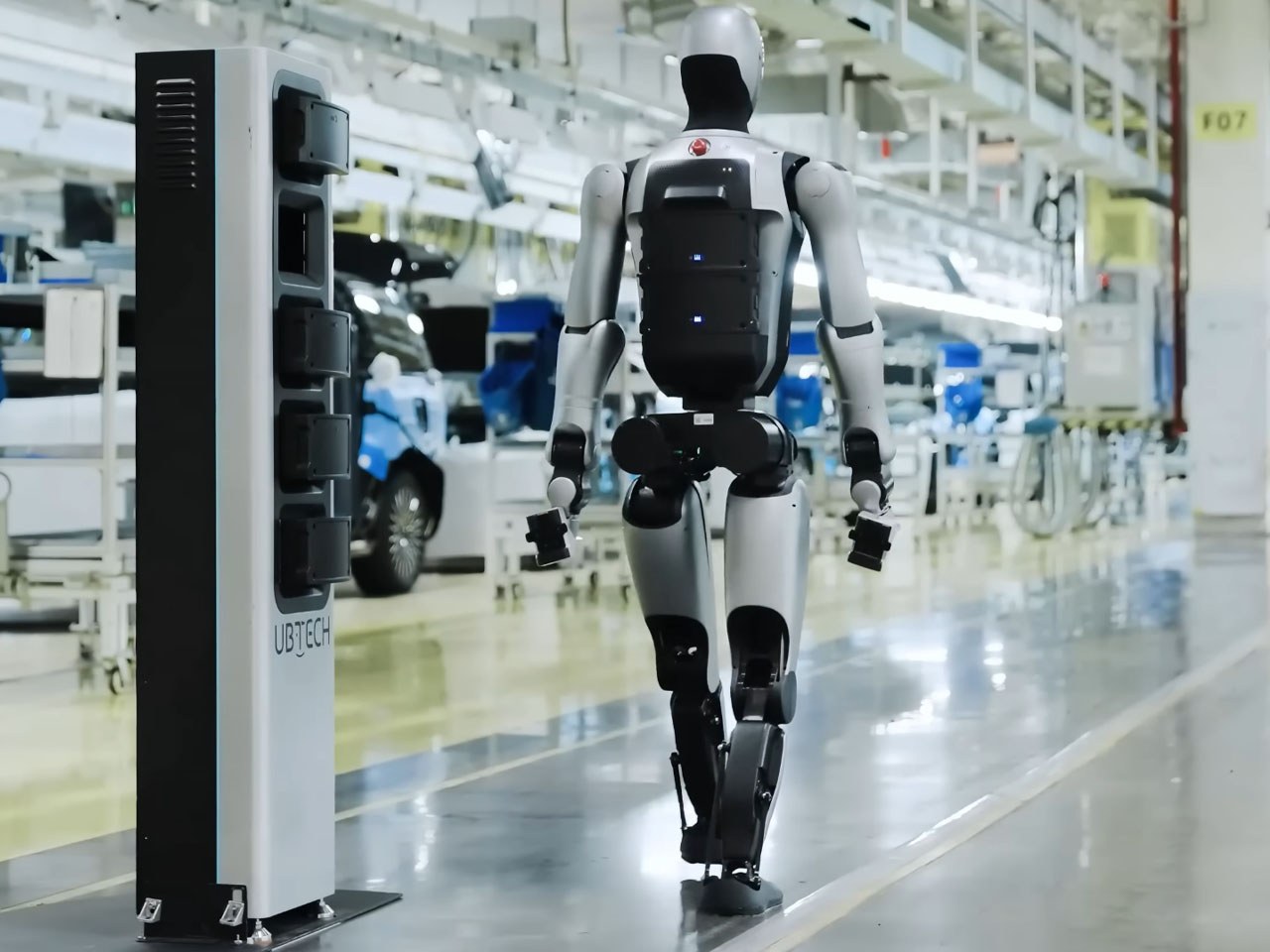
The automaker is opening real logistics scenarios to humanoids — a shift from demo videos to deployability as the industry's report card.
UBTech Robotics and FAW-Volkswagen have signed a strategic partnership to jointly develop and test embodied-intelligence robots for logistics operations, building demonstration scenarios and accelerating humanoid deployment across smart manufacturing.
The deal extends a relationship that began in July 2024, when FAW-Volkswagen opened its national smart-manufacturing demonstration factory in Qingdao to UBTech's industrial humanoid Walker S for bolt tightening, part installation, and part transport. This time the focus is logistics: loading and unloading, palletizing and depalletizing, small-parts sorting, and line-side delivery.
The choice of logistics is telling. Compared with final assembly, logistics tasks are relatively structured and more fault-tolerant — a reasonable entry point for humanoids into real industrial settings. FAW-Volkswagen, China's first passenger-car maker to pass 30 million cumulative vehicle sales, operates five production bases across Changchun, Chengdu, Foshan, Qingdao, and Tianjin, with 35 models in production across its Volkswagen, Audi, and Jetta brands.
UBTech says its industrial humanoid platform rests on four technology clusters — an embodied brain built on a foundation-model/world-model/action-model stack, a humanoid motion-control cerebellum, high-performance hardware, and swarm intelligence — and claims the top global position in revenue and humanoid unit sales based on peers' public financial disclosures. Its 10,000-unit-capacity humanoid super factory in Liuzhou went into production on September 12.
The partnership is the latest sign that the industry's scorecard is shifting from demo quality to deployability: automakers are both the most demanding customers and the most knowledgeable about mass-production discipline. Whoever proves reliability, takt time, and cost on an automotive line first gets a head start in the broader manufacturing rollout.