Toyota and Honda put humanoid robots to work on the line — and Honda is redesigning cars for them
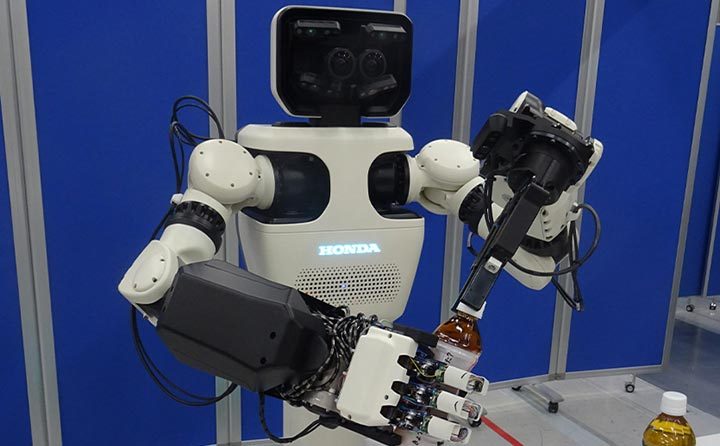
Toyota and Honda showed humanoids doing wire-harness and inspection work at the Japan Mobility Show; Honda is redesigning cars for robot workers.
Japan’s biggest automakers are putting humanoid robots on the factory floor — and one of them is changing car design to suit the machines. At the 2026 Japan Mobility Show in Tokyo, Toyota and Honda demonstrated humanoid robots being tested on tasks including wire harness installation and final vehicle inspections.
Honda’s exhibit centered on its Avatar Robot, which uses artificial intelligence to carry out delicate, complicated operations with human-like robotic hands. The company is beginning to rethink vehicle design around robot workers — an unusual admission that the machines are being treated as a durable part of the workforce rather than an experiment.
Toyota, for its part, is testing how humanoids handle assembly tasks. The demonstrations sit inside a wider factory-automation program: the automaker has said it aims to roll out large numbers of factory robots starting in 2028, including its wheeled ELEY humanoid, which learns tasks from human workers on the line.
The framing matters. Carmakers have used fixed robots for decades; the new claim is that humanoid form factors can work inside plants designed for people — routing wiring, inspecting finished cars — without rebuilding the line. Honda talking about redesigning cars for robots suggests the industry is starting to design the product for the machine, not just the machine for the product.