LG Signs Humanoid Safety Pact With Korea's Robot Institute as Samsung and LG Race Toward CES 2027
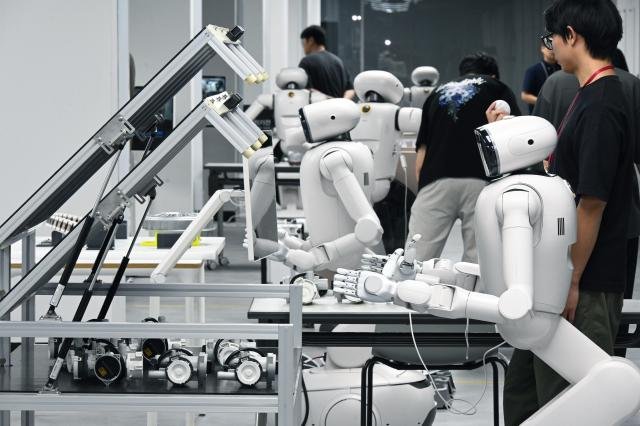
LG will help build Korea's humanoid safety certification system and seek pilot certification for CLOiD ahead of its bipedal robot's CES debut.
LG Electronics has signed an agreement with the Korea Institute for Robot Industry Advancement (KIRIA) to develop safety, reliability and usability assessment systems for humanoid robots, the company said on November 16. The memorandum of understanding was signed on November 13 at LG Twin Towers in Seoul.
Under the agreement, LG will help build the evaluation system for KIRIA's Humanoid Robot Safety Certification Center and contribute to national and international standards for the technology. LG also plans to pursue domestic pilot safety certification for its own humanoid robots, including LG CLOiD, the wheeled humanoid it has been training at its LG Data Factory.
The pact lands as LG races a bipedal robot built on Nvidia's reference platform toward a public unveiling targeted for the first quarter of 2027, with CES 2027 reportedly set as its debut stage. LG plans to supply the machine first to research and educational institutions in the second half of next year, prioritizing technical completeness over a consumer launch.
Samsung is moving on a parallel track. The company is pushing ahead with plans to unveil a humanoid prototype at CES 2027, and last month chairman Lee Jae-yong visited its Robotics eXperience division in Seoul to watch high-difficulty motion demonstrations, including precision manipulation with robot arms and hands, jumps and backflips. Samsung has said it will use its more than 100 factories and production lines as test beds for the technology, a plan it outlined at an AI forum in September, and it is researching robot foundation models and world models to give its machines better judgment in changing factory environments.
The throughline is a shift in the contest itself: from demonstrating that a humanoid can move, to proving it can work safely and repeatedly alongside people. LG is buying that proof through certification and standards; Samsung is buying it through factory-floor data. Whoever can show a robot that holds up in a real industrial or research setting around next January's unveilings will set the terms for the Korean humanoid race.