Thousands of humanoids clock in for China's National Day as rental rates crash below $140 a day
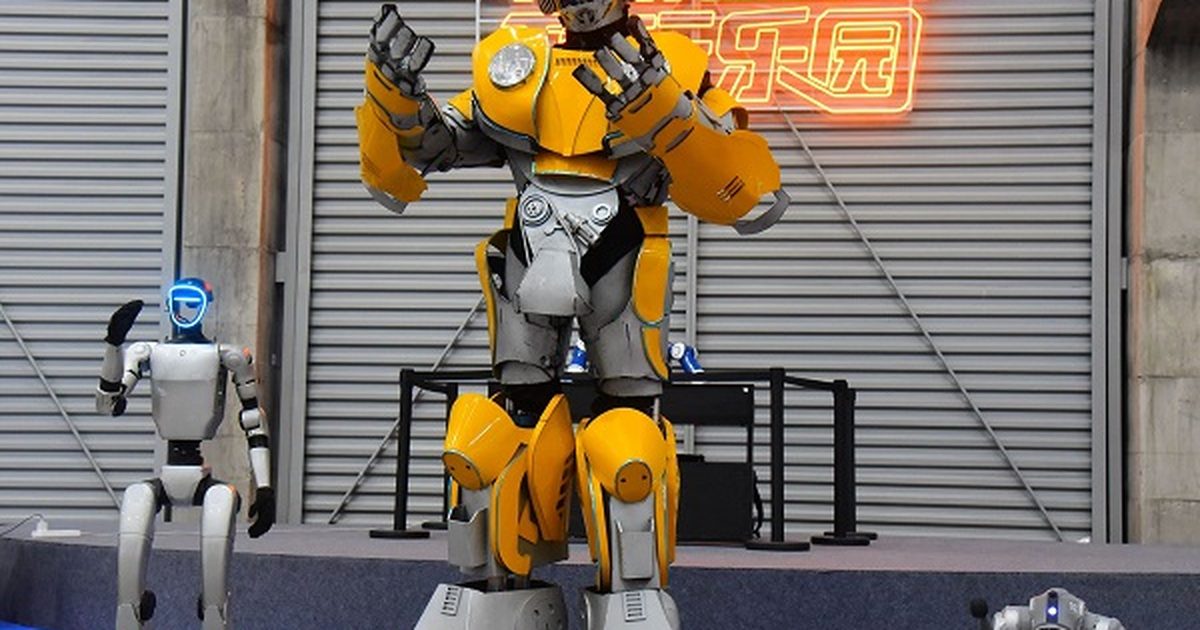
Nearly 30 embodied-AI companies deployed thousands of robots across scenic spots, stores, and theme parks during the week-long holiday — working as clerks, patrol dogs, and kiosk vendors while daily rents fell off a cliff.
Thousands of humanoid robots clocked in for work across China during the week-long National Day holiday, as nearly 30 embodied-AI companies pushed machines out of the demo stage and into scenic spots, retail stores, and theme parks.
The holiday rush doubled as a stress test — and a price collapse. Daily rental rates for humanoids have fallen from over 10,000 yuan (about $1,400) in early 2025 to under 1,000 yuan (about $140). Listings on secondhand platform Xianyu now advertise Unitree humanoid rentals starting at 289 yuan (about $40) a day.
The bigger shift is what the robots are doing. Galbot's G1 humanoid worked as a shop clerk inside a mobile vending cart in Jingdezhen's Taoxichuan cultural district, handling greetings, product recommendations, ordering, payment, and item pickup and delivery. Galbot's unmanned capsule-style retail stores now operate at around 200 locations across roughly 50 cities, including the Summer Palace and the Badaling section of the Great Wall.
Zhiyuan Robotics deployed its Lingxi humanoid as a one-day store manager at Burton and fragrance brand AD VITAM locations. Partner brands reported solid holiday results: AD VITAM posted a 9% year-on-year sales lift, while Burton's average order value rose 16%. At Chimelong's spaceship theme park in Hengqin, more than 300 Zhiyuan robots staffed over 100 stations doing science demos, ping-pong matches, calligraphy, and interactive games. Food-service kiosks run by Kuafu Intelligence served over 110,000 visitors during the holiday, with a single robot handling more than 500 orders a day; its flagship store pulled in 150,000 yuan (about $21,000) for the week. Robot dogs took on patrol duty — one scenic area in Zhejiang deployed quadrupeds for inspection rounds, while a temple in Datong put a patrol robot dog on round-the-clock duty covering visitor guidance and fire checks.
But the commercial math remains unsolved. Zhiyuan says its Chimelong deployment currently runs at roughly three robots per on-site staff member, with a near-term target of 10:1 and an ideal goal of 20:1. Most projects still depend on holiday foot traffic, and there is no standard way to measure whether tourist interactions convert into incremental spending.
Data is the other bottleneck. Real-world human-robot interaction data from tourism scenarios feeds back into model training — something internet data cannot replace — but whether lessons from the relatively forgiving tourism training ground transfer to more demanding industrial settings is still an open question. "To truly reach a point where the average person considers them fully autonomous, like a human, I think it will take at least 3 to 5 years," Zhiyuan partner Xiong Yan said in an interview with STAR Market Daily.