BYD's humanoid robot design revealed in new design patent
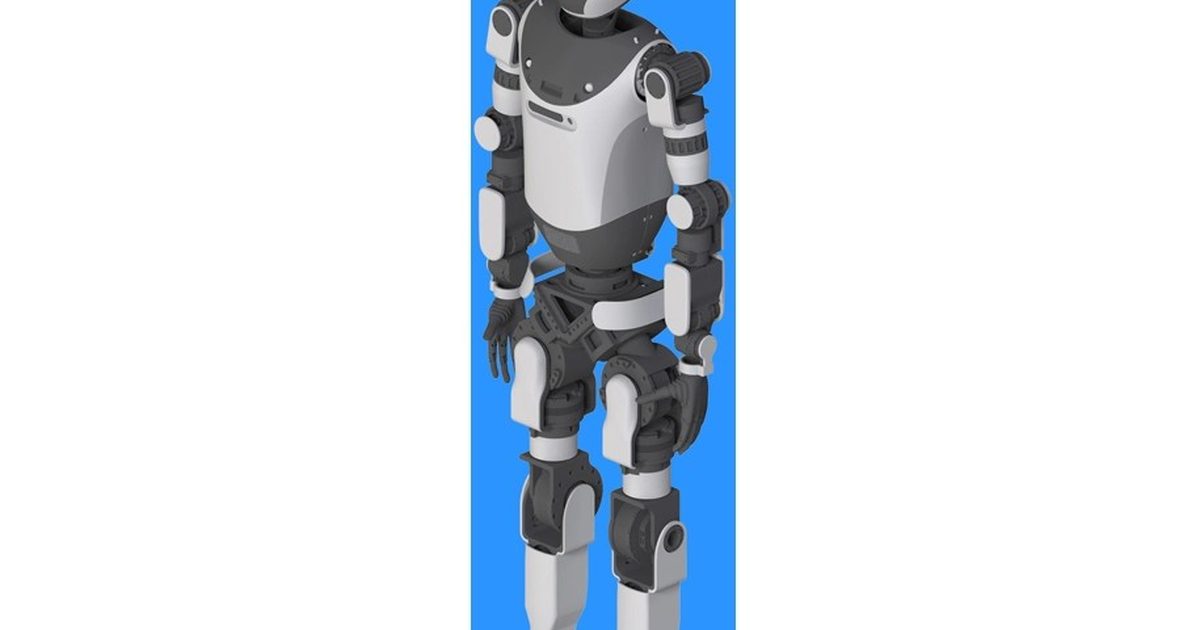
China's IP office published BYD's design patent for "Xiao Di" on October 9 — a black-and-white service humanoid, 1.61 m tall with 31 degrees of freedom, matching the silhouette the automaker teased in July.
China's National Intellectual Property Administration published a design patent for an embodied-intelligence humanoid robot on October 9, revealing the official look of BYD's self-developed humanoid for the first time. The patent, filed by BYD Co., Ltd. on April 30, describes a robot for walking, balance, and interaction, usable in service, education, or industrial settings.
The drawings show a black-and-white machine with a rounded, dome-like head and no prominent display screen. Joints are visible across the torso, arms, and legs, giving the limbs a wide range of motion. The design closely matches a concept silhouette poster that BYD executive He Zhiqi shared on social media on July 28 teasing "Xiao Di."
BYD's disclosed specs for Xiao Di: 1.61 meters tall, 58.5 kilograms, 31 degrees of freedom across the body, with dexterous hands rated at ±1 mm repeat positioning accuracy — capable of grasping objects, gesture interaction, and pointing explanations, the company says.
The robot made its real-world debut in August at BYD's "Di Space" experience center in Zhengzhou, positioned as a service humanoid. BYD executive vice president Stella Li has said the company is developing humanoid robots, arguing that the software complexity of its cars ports easily to robots, and has expressed hope that every BYD store could one day deploy robots to introduce and demonstrate vehicles to customers.
BYD is the latest automaker to join the humanoid race, alongside Tesla's Optimus and XPeng's Iron. Its pitch is vertical integration: batteries, motors, electronic controls, and large-scale manufacturing from its auto business could drive down robot hardware costs and speed up production.