China's Carmakers Pull Humanoids Back From the Assembly Line
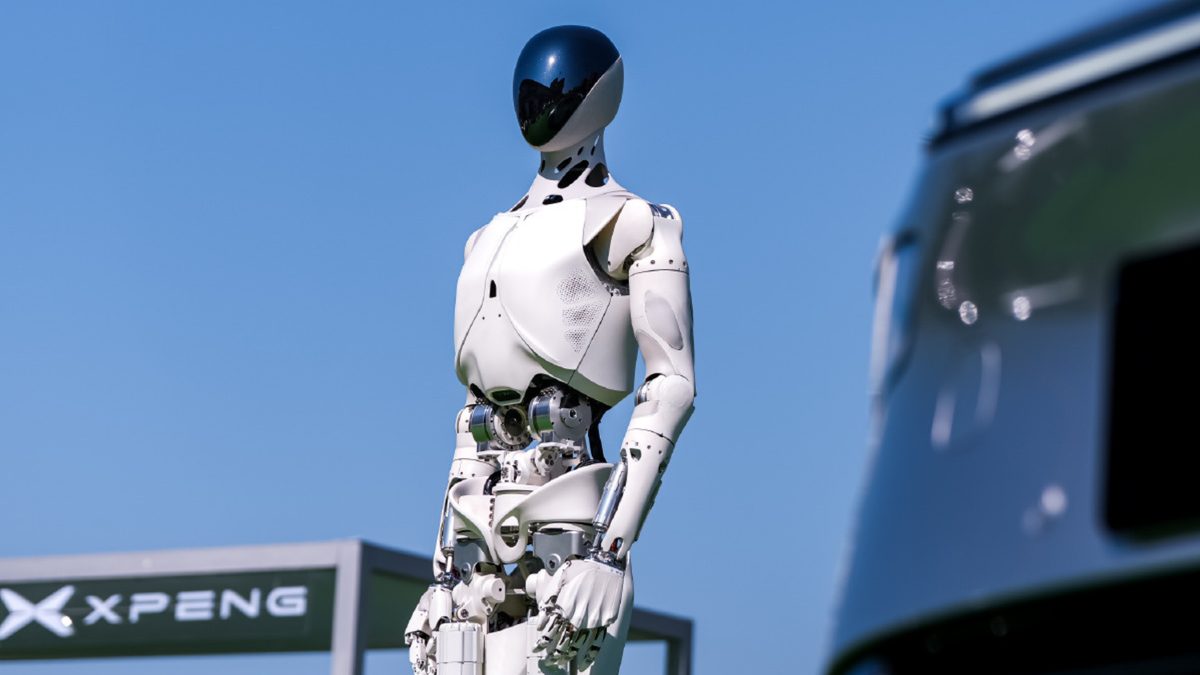
Geely, XPeng and Li Auto are scaling back factory deployments after three-second cycle times, worn-out hands and welding glare exposed the gap.
For the past two years, the car factory has been the humanoid robot's proving ground. Automakers from Geely to XPeng announced deployments on their own lines, and investors treated each pilot as evidence that general-purpose robots were finally ready for paid work. A new investigation by Caixin finds the proving ground pushing back: Chinese carmakers are quietly scaling down their humanoid plans on the assembly line and recasting the robots as helpers for simpler jobs.
The arithmetic is brutal. A line turning out 60 cars an hour gives each station about three seconds to finish its task, and Caixin reports that today's humanoids cannot keep that pace. One executive who trialed the robots told Caixin that even simple picking and sorting suffered from poor accuracy and slow movement, and claimed a startup partner had sped up promotional videos to make its robots look viable.
The machine the humanoids must beat is not another robot but the industrial arm already bolted to the floor. Zhou Jun, head of smart manufacturing at Geely, told Caixin that a heavy-duty industrial robot able to lift 270 kilograms costs a fraction of a humanoid and runs 80,000 to 100,000 hours between failures. The industrial arm's weakness is inflexibility: retooling it for a new model is expensive. That was precisely the gap humanoids were supposed to fill, and they have not closed it yet.
The hands are failing first. Caixin reports that Figure identified the forearms of its humanoids deployed at BMW's plant as the main mechanical failure point. XPeng spent more than a year trying to put its IRON humanoid to work in its own factories before concluding the economics did not work; chairman He Xiaopeng has said the dexterous hands, the most expensive component, were destroyed too quickly by factory wear. At IRON's launch last November, he said a single hand could cost as much as paying a worker for several years.
The factory environment itself fights back. Li Peigen of the Chinese Academy of Engineering told Caixin that welding sparks, shadows from moving conveyors and glare off sheet metal can blind robots that rely on vision-language-action models. Cars and humanoids also turn out to share less than assumed: cars operate on rule-bound roads with vast training data, while two-legged robots work in cluttered three-dimensional spaces where real-world data is scarce. Caixin notes that Tesla is pursuing automation for its Cybercab not through humanoids but through an unboxed process that splits the vehicle into modules, pushing final-assembly automation to 78 percent.
Nobody is walking away. Geely is trialing robots for parts sorting, while BYD and XPeng are developing humanoids for their retail showrooms. Changan believes plants must be retrofitted for robots rather than the other way around, and some suppliers are redesigning parts into robot-friendly shapes. Hu Haifeng, a robotics co-founder formerly at Huawei, told Caixin that human-robot collaboration, with robots handling mundane tasks while people manage complex manipulation, lowers the immediate technical bar. Experts quoted by Caixin put the technology three to five years from maturity.
The retreat is a correction, not a collapse, but it matters beyond China. Car plants were the proof point investors cited when valuing humanoid makers. If the most structured, best-funded factories cannot yet make the numbers work, early commercial volume is more likely to come from slower, more forgiving work: sorting, logistics, inspection and customer-facing roles, where a three-second cycle time is not the bar. Watch what automakers announce next: specific tasks, cycle times and unit counts, rather than pilots, and hand-durability figures, the clearest test of whether the factory floor reopens.