UK funds £9.8 million robotics adoption hub for South West businesses
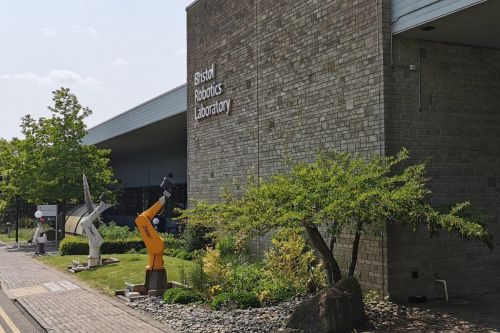
Led by the Bristol Robotics Laboratory, the 23-partner hub — one of eight nationally — will help firms adopt robotics from January 2027.
The University of Bristol has announced a £9.8 million programme to push robotics and automation into businesses across South West England. The Greater South West Robotics Adoption Hub, led by the Bristol Robotics Laboratory together with the University of the West of England (UWE Bristol) and the National Composites Centre, will give regional firms access to robotics expertise, live demonstrations, and adoption support. Innovate UK is supplying £7.2 million through its Robotics Adoption programme — part of the UKRI IS8 Advanced Manufacturing Programme — with the remaining £2.6 million contributed by project partners.
The hub brings together 23 partners from industry, academia, and local government, including the University of Bath, Oxford Innovation, GKN, Somerset Council, the Centre for Modelling & Simulation, and Burges Salmon; 15 businesses are already participating in the consortium. It is organized around three strands of activity: a one-to-one advisory service helping companies identify automation opportunities, build investment cases, and access finance (led by the National Composites Centre); a showcase programme of industrial site visits, demonstration facilities, and proof-of-concept work; and an ecosystem programme of events and networking connecting adopters, technology suppliers, and support organisations.
The hub is one of up to eight Robotics Adoption Hubs being established across the country, forming a national network aimed at accelerating uptake of robotics and automation. The programme is expected to be fully operational by January 2027. The examples the universities cite span the region’s industries: maritime infrastructure in Devon, energy assets around the Solent, food and drink producers in Cornwall and Gloucestershire, precision aerospace manufacturing in Somerset, and healthcare providers in Bristol.
The design targets the classic adoption gap. For most firms, the problem is not understanding what robotics could do but knowing where to start, which technologies fit their operations, and whether the investment will pay back — precisely the questions the advisory service is built to answer. At £9.8 million the hub is modest next to national industrial programmes, but it reflects a broader UK bet: that the bottleneck in robotics is no longer the technology but deployment — getting machines from lab demos onto the floors of factories, warehouses, and clinics that have never bought a robot before.