BASAL Intelligence raises seed round for an action-native embodied AI model
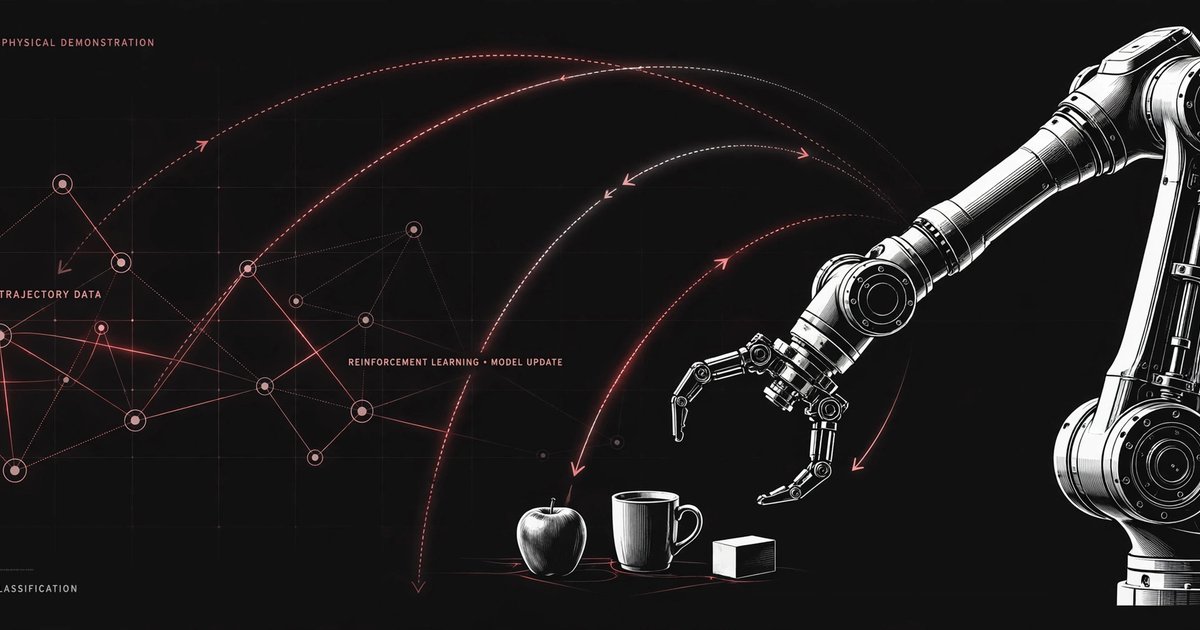
The Beijing startup wants robots to learn new tasks in minutes from a few human demos, with actions — not language — as the model’s core expression.
A Beijing startup founded less than three months ago has closed a seed round to pursue a contrarian bet in embodied AI. BASAL Intelligence, founded on July 21, 2026 by eight researchers from China’s embodied-intelligence community, announced its seed financing on October 8. The round was led by 5Y Capital, with Ivy Capital, Linear Capital, and WestSummit Capital participating. The amount was not disclosed; Lighthouse Capital served as the sole financial adviser.
The company’s technical wager is in its name. Where the dominant vision-language-action paradigm puts language at the center of the model, BASAL is building what it calls an “action-native” in-context embodied foundation model: action as the core expression, with the bulk of model capacity devoted to generating it. The model is designed to capture the relationships between actions, task feedback, failure corrections, and human demonstrations, organizing long stretches of physical interaction in extended context so that each decision reflects what the robot tried before and what happened.
The goal, per the company’s disclosures, is adaptation without retraining: faced with a scene, task, or even a robot body the model never saw in training, a few human demonstrations and some self-directed trial should be enough for the robot to adapt within minutes — the model’s parameters frozen, learning happening entirely in context. That would attack the industry’s deployment bottleneck directly: today, a changed part size, a moved pallet, or a swapped manipulator brand can send a deployment back to data collection and post-training.
The team points to two research projects as its evidence base. X-VLA, a cross-embodiment model the team says was trained on under 1,000 hours of pretraining data, won the grand championship of the IROS 2025 Zhiyuan Robot Challenge among more than 400 teams. ODEWorld, a latent world model, explores representing long physical-time sequences in a continuous latent space. Both are research results, not deployment proof — and neither comes with public evaluation results beyond the competition win.
The people carry much of the pitch. Founder and CEO Li Jianxiong graduated from Xi’an Jiaotong University’s mechanical engineering school in 2021 and went on to a PhD at Tsinghua AIR under Ya-Qin Zhang, as part of the institute’s first doctoral cohort; the company credits him with nearly 30 top-conference papers. Chief scientist Zhan Xianyuan is a Tsinghua AIR associate professor and director of the AIR-DREAM Lab, previously with Microsoft Research Asia, JD Technology, and Shanghai AI Lab. The company says other members contributed to the Wall-OSS-0.5 and X-Tokenizer embodied models and the Diffusion Planner autonomous driving work.
Measured against the standards the team itself would need to clear, much remains undisclosed. “Within minutes” has no published definition — model inference time, or the full loop from human demonstration to deployed task? The company has released no task set, success-rate baseline, supported context length, tested body types, or fallback behavior when in-context adaptation fails. There is no product, no named pilot customer, and no revenue on the public record. What investors bought is a team and a research thesis, not a demonstrated capability.
The timing is deliberate. The same week, the industry’s data arms race made headlines: physical-AI companies are pouring billions into robot gyms and teleoperation fleets to generate the training demonstrations that web-scale text once supplied for language models. BASAL is wagering on the opposite intuition — that a model which treats action itself as the primary expression, and learns from failure as well as success, can substitute for sheer data scale. It is a thesis worth watching precisely because it cuts against the consensus — and one that will need externally verifiable demonstrations, not more financing rounds, to prove itself.