AGILINK’s OmniHand 3 Ultra learns Suzhou embroidery as dexterous-hand shipments pass 15,000
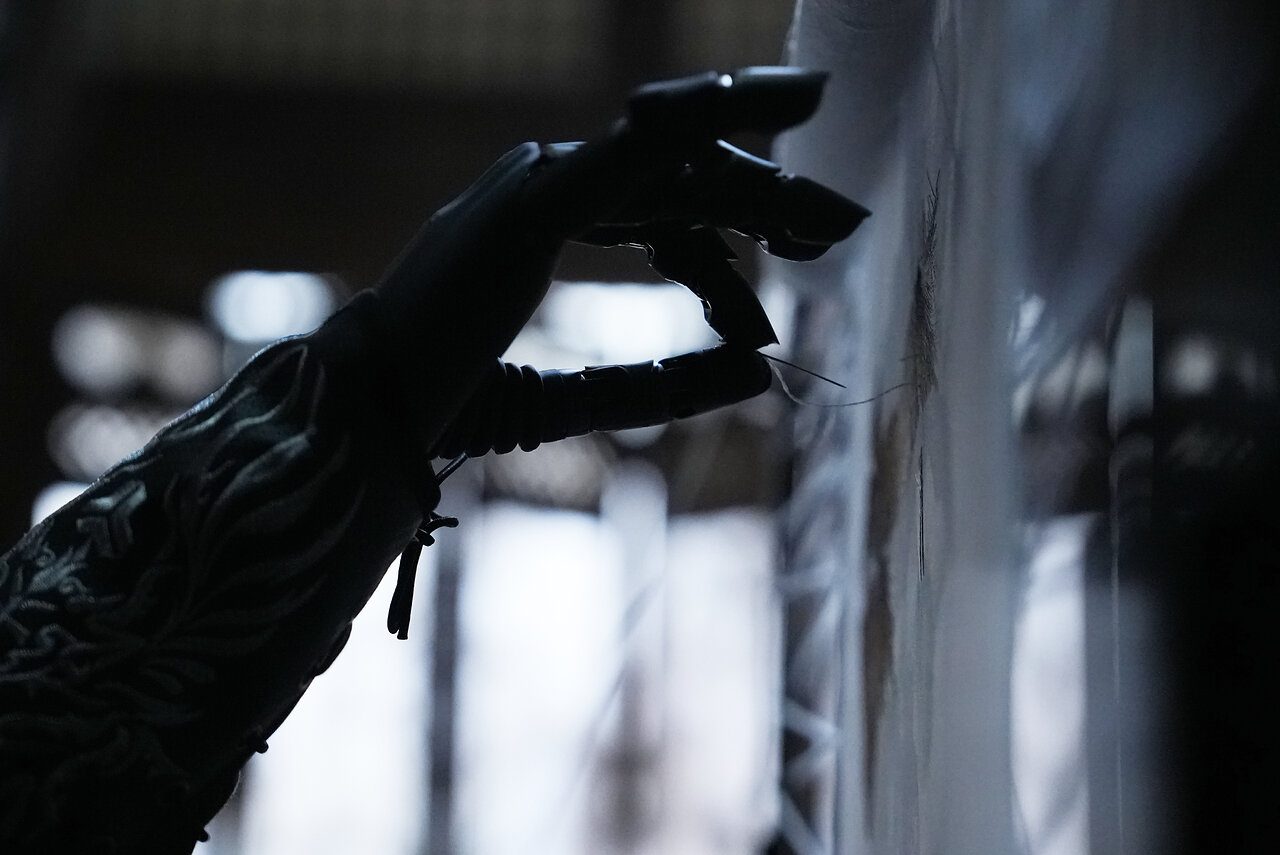
The AgiBot spin-off’s 21-DoF hand splits a silk thread into 16 strands — a tactile-dexterity benchmark learned from a master embroiderer.
AGILINK, the dexterous-hand maker spun out of Chinese robotics group AgiBot in January 2026, has put its flagship hand through one of the most unforgiving dexterity tests imaginable: Suzhou embroidery. In a company demonstration announced September 30, the OmniHand 3 Ultra was taught foundational moves of the centuries-old craft by master embroiderer Fu Xianghong — separating silk threads, threading a needle, stretching fabric on a hoop, and laying down stitches. The headline feat: splitting a single silk thread into 16 strands, with one finger teasing the strands apart while the others hold support and tension.
The engineering under the stunt is the point. The OmniHand 3 Ultra has 21 active degrees of freedom and a fully direct-drive architecture, with vision-based tactile sensors across the fingertips, finger pads, and palm that the company says detect contact-surface deformations as small as 0.08 millimeters. The embroidery tasks map to distinct manipulation problems, per the company: splitting silk demands one finger to separate strands while the rest maintain tension; twisting thread needs opposing fingertips to stay in contact while the thread rotates; needle-threading and stitching add demands on positioning, force, and coordination. Silk, the company notes, is among the most delicate, deformable materials a hand can encounter — it bends, slips, and reshapes under the slightest shift in contact.
The announcement also marked a commercial milestone. AGILINK says it has shipped more than 15,000 dexterous hands to date, and its OmniHand series competed across all eight dexterous-hand events at the World Humanoid Robot Games in August, taking seven gold, four silver, and three bronze medals. “A single silk thread gives OmniHand 3 Ultra’s fingertip dexterity a visible measure,” said Qiao Tianjie, AGILINK’s CEO, who is also a vice president at AgiBot. “It also reveals the possibility of handing more delicate work to machines.”
Read the demo for what it is: a marketing-grade dexterity benchmark, not a deployment. Every figure here — the 15,000 shipments, the 0.08-millimeter sensitivity, the medal count — comes from the company, and the embroidery was performed under a master craftswoman’s guidance, a setup closer to a guided performance than an autonomous task. Still, the choice of test matters. Most dexterous-hand demos pick up blocks and turn valves; few attempt a material that punishes excess force with a snapped thread. As tactile sensing becomes the differentiator in the dexterous-hand race, the ability to feel one’s way through silk is a more honest signal of progress than another peg-in-hole video.