Xiaomi built a robot hand from 1,827 factory jobs instead of chasing joint counts
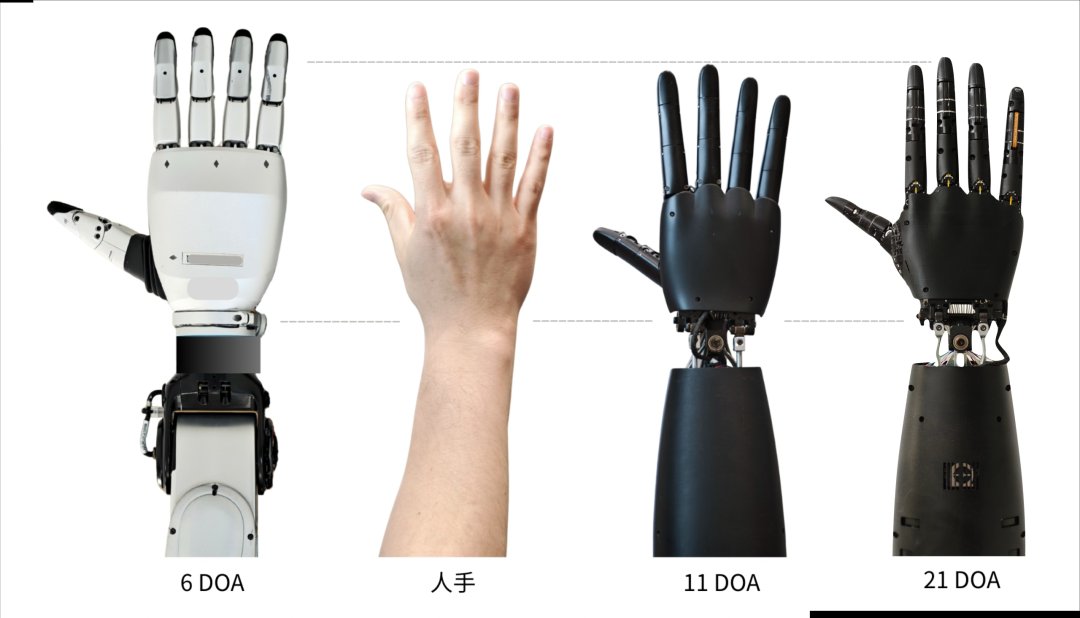
Xiaomi's new bionic hand has 21 degrees of freedom, 26 motors and 1,500 tactile points, with the spec derived from real factory work.
Xiaomi has unveiled a bionic hand for factory work that starts from a different question than most dexterous-hand projects: not how many joints can be packed into a palm, but how many the job actually needs. The hand has 21 degrees of freedom, a hybrid drive system with 26 motors, and high-density tactile sensing across 1,500 points on the palm. The specification was calculated from real work, not chosen from a spec sheet.
Engineers at Xiaomi's automotive manufacturing pilot center selected 16 typical work sections and 2,579 standard operating procedures, then captured video and motion data for 1,827 of them, covering more than 70 percent of manual tasks. Analysis of how human hand joints are actually used, including which joints move in tandem, set the feasible range; simulation ablation testing then fixed it. Hands with 17 to 21 degrees of freedom achieved stable grasp success rates 15 to 38 percent higher than 6- to 15-degree designs, while going beyond 23 degrees added little grasping ability for the added complexity. That is how 21 became the answer.
Fitting 21 degrees of freedom into a palm-sized hand forced a hybrid design. The hand primarily uses tendon drive, supplemented by five direct-drive degrees of freedom on lower-load joints, with the cable-driven motors relocated to the forearm. That brings palm weight down to 324 grams, so the hand reacts faster, though the forearm still carries the motor weight. A proprietary tendon tension sensor compensates in real time for the creep that degrades cable-drive accuracy over time, and a thermal prediction model forecasts temperature 5 to 10 minutes ahead within 3 degrees Celsius, since a single hand can exceed 100 watts under harsh sustained gripping.
The tactile system is built for data as much as for touch. Sensing points cover the whole palm at 1 millimeter resolution on fingertips, finger pads, and finger bases, and 2 millimeters on the palm, and the sensors are replaceable for maintenance. Contact data in human-hand form doubles as training material for manipulation models, extending the tactile glove work Xiaomi showed earlier.
The limits matter as much as the specs. The 21-degree figure was calculated for Xiaomi's own car factory tasks; folding clothes at home or plugging cables on a consumer electronics line would change the action mix and possibly the optimum. Xiaomi has disclosed no lifespan or cost figures for the tendon system, no mass production timeline, and no external supply availability. The hand is a technical exploration, not a product. Its significance is methodological: in a sector still arguing over drive types, Xiaomi counted more than a thousand real actions before deciding what to build.