Unitree's Wang Xingxing: China's Robot Output Could Surpass Cars Within 5-10 Years
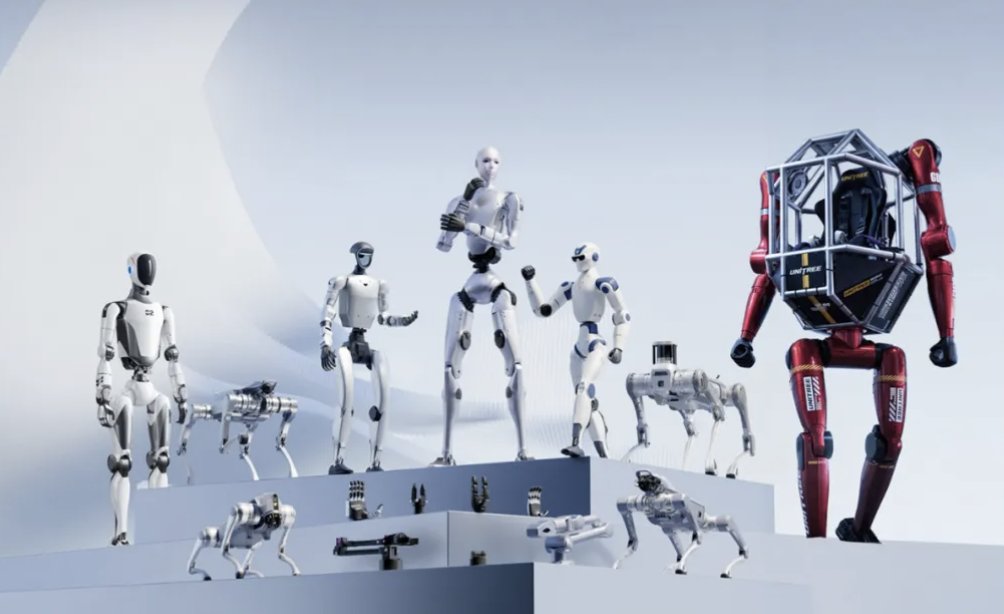
Unitree's founder told the WISE2026 conference that annual robot output could top 20 million units, overtaking automobile production.
China's annual robot output could overtake automobile production within five to ten years, topping 20 million units a year. That was the assessment from Unitree founder and chairman Wang Xingxing at the WISE2026 conference in Beijing on November 26.
Wang's reasoning turns on manufacturing logic rather than demand. Robots are generally smaller than cars, so once the core technology is proven, the production difficulty and engineering workload are, in some sense, slightly less than for automobiles. The auto industry also runs on a sprawling matrix of vehicle types and components, while robots ultimately involve fewer models, so a single factory can produce far more complete units under higher standardization.
The gap to close is still enormous. China produced 34.531 million vehicles in 2025, its 17th consecutive year as the world's largest auto market, according to the China Association of Automobile Manufacturers. China's humanoid robot output is expected to exceed 100,000 units in 2026, up from roughly 20,000 in 2025. Most domestic firms, including Unitree, are still deploying units in the thousands across production lines and commercial service. Wang said reaching larger volumes is not just a technological issue: the engineering workload is also substantial.
Wang put a longer clock on everyday adoption. He expects widespread global use of robots to take ten to twenty years, with reliable manipulation and deployment engineering still to be solved before machines can work at scale outside controlled settings.
He also weighed in on OpenAI's robotics team, saying it had been reorganized rather than disbanded, and that physical AI faces no insurmountable barriers at the foundational level, with core technologies set to break through in the coming years.
The forecast reframes the humanoid race as a manufacturing race. The question is no longer whether robots can walk or grasp, but whether the industry can standardize production fast enough to build them by the million.