Tesla Sets Up German Company at Gear Maker EMAG's Headquarters in Optimus Supply Push
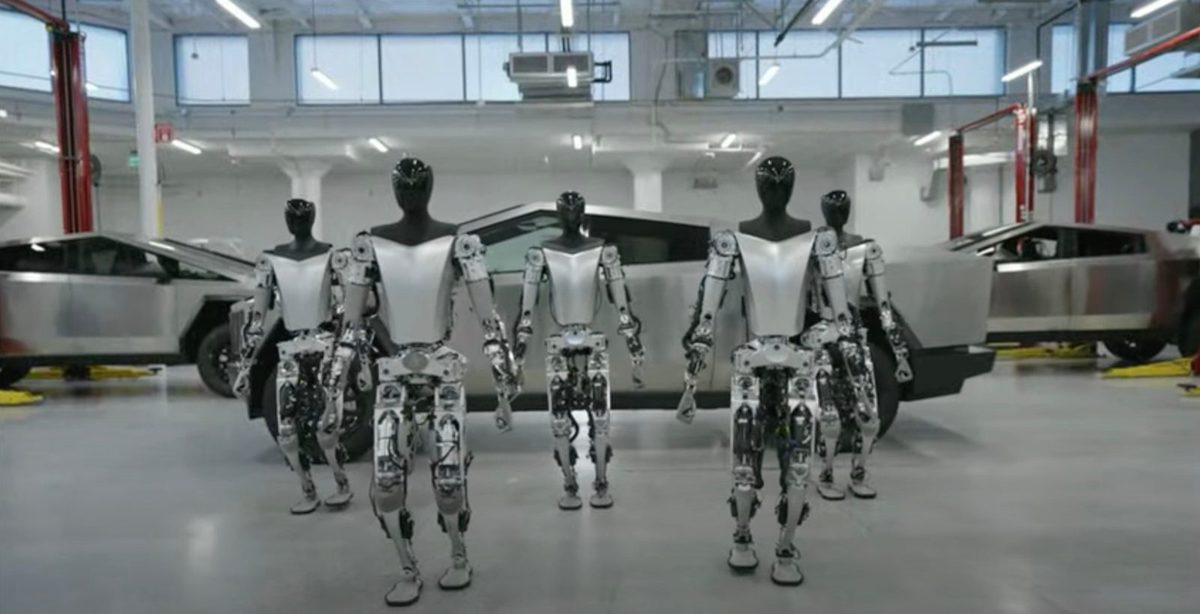
Tesla set up a new German company at gear maker EMAG's headquarters, with local press reporting about 220 EMAG employees could move to Tesla.
Tesla has registered a new German company at the headquarters of EMAG, a machine-tool maker whose equipment cuts the precision gears inside humanoid robot joints, in the clearest sign yet that the automaker plans to bring Optimus actuator manufacturing in-house. The filing lists the company as Tesla Machining Technologies Management SE, registered under HRB 315756 at the Munich district court, with 120,000 euros in share capital and a business address of Austraße 24 in Salach — EMAG's home base.
The entity did not start out as a Tesla company. The register shows it was first entered on August 26 as Blitz 26-299 SE, a pre-registered shell company, and Tesla renamed it earlier this month. Three people run it: Maximilian Stromberger, Tesla Germany's 33-year-old head of sales, an American robotics engineer, and the head of human resources at Tesla's Grünheide factory. The human-resources appointment is the telling detail: a passive stake in a supplier needs no HR chief, but taking on employees does. Neither Tesla nor EMAG has confirmed a deal, and neither answered repeated requests for comment.
Local press near Salach has been tracking the move for more than a week. On November 23, the Stuttgarter Nachrichten reported that signs of a Tesla entry were piling up and that EMAG had briefed its workforce at a large staff meeting the week before, which Business Insider Germany dates to November 16. On November 25, the same paper reported that around 220 EMAG employees will move to Tesla, that the two companies have been working together for some time, and that the deal is about humanoid robots. None of that has been confirmed by either company.
EMAG, whose roots go back to 1867, builds turning, grinding and gear-cutting machines, mostly for car parts such as transmissions and drivetrains. It has also been chasing a new market: its website carries a section on manufacturing humanoid robot actuator parts — flexsplines, wave generators and planetary gears. The first two form a strain wave gear, the compact, high-reduction gearbox used in robot joints, while planetary gears go in the larger joints that carry more load. EMAG says its machines hold these parts to ISO 1328 Class 4 gear quality, with runout under five micrometers, and can repeat that in high-volume production.
That is exactly where Tesla says it is stuck. On the third-quarter earnings call in October, Musk called the hand Optimus' main hardware problem and flagged custom gears as a reliability worry. Tesla has begun early production of Optimus Gen 3 on high-volume lines at Fremont, and the line is designed for about a million robots a year. The Optimus design Tesla showed in 2022 used 28 structural actuators per robot — at that volume, tens of millions of actuators a year, many of them built around precision gears that few suppliers can make consistently.
Tesla has bought its way into German manufacturing talent before. It agreed to buy Grohmann Engineering in late 2016, a deal that became Tesla Automation, and in early 2025 it took over the former Manz site in Reutlingen with about 300 employees. Since July, Tesla has been recruiting in Reutlingen to develop and manufacture Optimus parts, including sensors, gearboxes and actuators, plus the equipment to mass-produce them. EMAG, meanwhile, is under pressure: it lost 42 million euros on 496 million euros of revenue in 2024, and a year ago it said it would cut 455 jobs in Germany, roughly 300 of them in Salach — about a third of its domestic staff.