Tesla brings Cybercab and Optimus to Shanghai's import expo
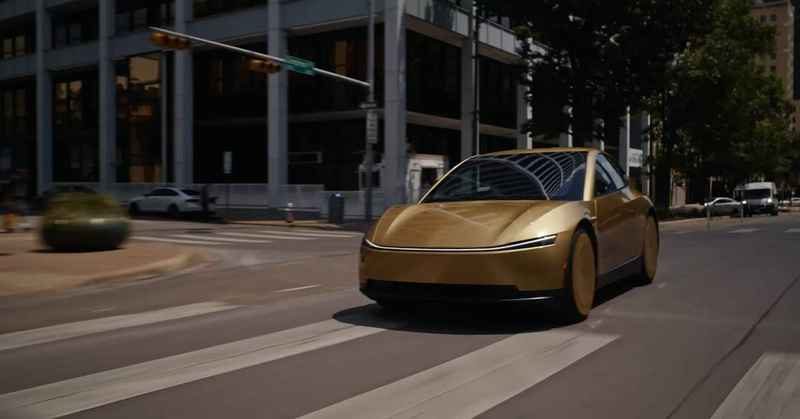
The production Cybercab makes its Asia debut beside the latest Optimus at the China International Import Expo — a showcase, not a launch.
Tesla has brought its two most ambitious products to Shanghai. At the China International Import Expo, which opened on Thursday and runs until November 10, the company is showing the production Cybercab next to the latest Optimus humanoid robot — the driverless car's first appearance in Asia. It is Tesla's biggest presence in China this year, with its first dedicated exhibition zone in the expo's Lingang pavilion, home to Giga Shanghai.
The Cybercab on display is the production version: a two-seat car with butterfly doors, a 22-inch centre screen and no steering wheel or pedals, finished in gloss gold. Beside it, the latest Optimus appears in demonstration scenes carrying luggage, walking a dog and sorting parts on a factory line. On the first day the robot drew crowds, moving bags in front of visitors. The stand also holds the new Model Y Performance, an exploded Model Y laid out part by part, storage products and a design corner styled after the Robovan autonomous people mover.
The display is static, and that matters more than the hardware on show. Nothing here signals a Chinese market launch, sales or a driverless taxi service: autonomous rides in China would need separate approvals, and Tesla has announced no timeline. Mass production of the Cybercab is expected to begin next year, and the car has been running public driverless rides in Austin, Texas since September.
Tesla China staff at the expo shared figures on that Austin service. The company says the Cybercab joined its Robotaxi fleet there on September 3, and the fleet grew roughly tenfold to more than 300 vehicles within 30 days. By October 18 it had covered about five million kilometres with no one in the driver's seat, Tesla says, and the service now runs in seven cities or areas across Texas, Florida and California — in six of them without a safety driver, with an employee still on board in the San Francisco Bay Area. Those are company figures, not independently verified data.
On Optimus, the company said the first version designed for volume production is about to enter manufacturing, with a long-term cost target of USD 20,000 to USD 30,000 per unit. There is still no sales date. The message of the stand is clear enough: in China, Tesla wants to be seen as an AI and robotics company, not only a carmaker. Tesla China also said its Shanghai factory now sources 98 percent of its parts locally, a partnership message aimed at the government-hosted import fair.