Russia's Teledroid Humanoid Is on Its Way to the Space Station
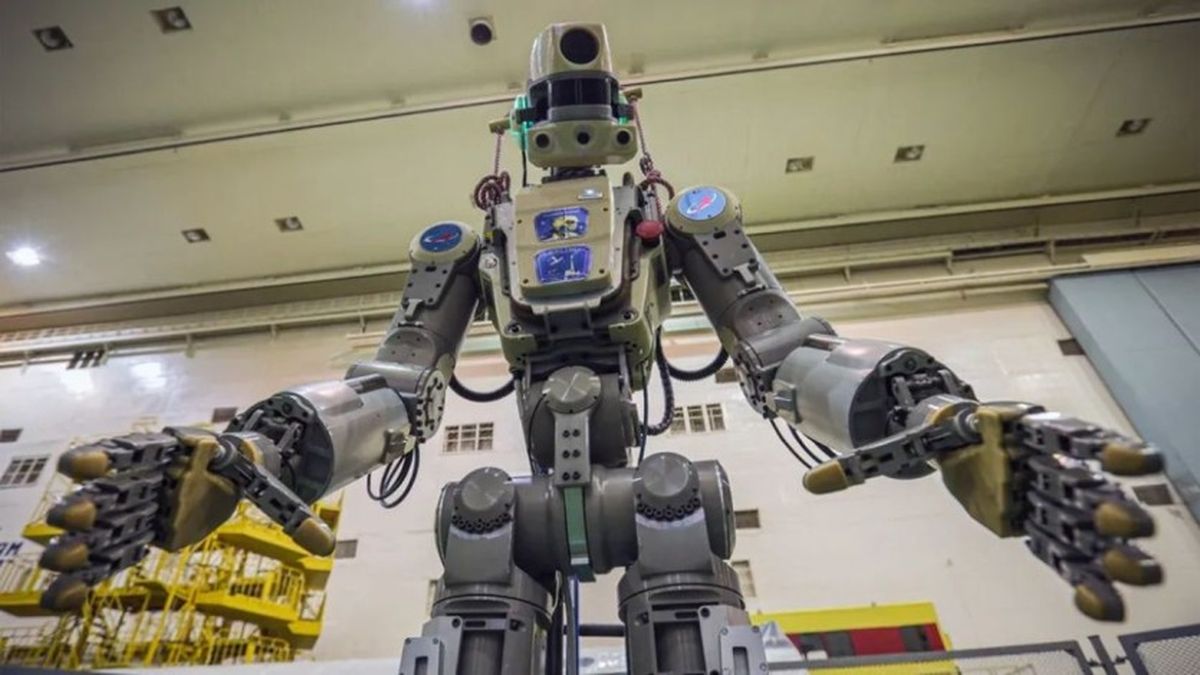
The torso robot launched aboard Progress MS-36 and is due to dock on November 26, ahead of a spacewalk installation on the Nauka module.
Russia has launched a humanoid robot toward the International Space Station. The Teledroid robot lifted off aboard the Progress MS-36 cargo spacecraft from Baikonur Cosmodrome on November 24, and Roscosmos expects the ship to dock with the station's Poisk module on November 26.
Teledroid is a torso-type robot built by NPO Android Technics, the developer behind the FEDOR robot that flew to the station in 2019. The experiment is organized by TsNIIMash with RSC Energia. The robot weighs about 105 kilograms and is designed to work on the station's exterior, where it must withstand vacuum, radiation and wide temperature swings.
A cosmonaut inside the station will control Teledroid by wearing an exoskeleton that copies their movements, while watching through virtual-reality goggles. The robot can also run on its own or take voice commands: in supervisory mode, a cosmonaut assigns a task and Teledroid uses machine vision to pick up and hand over tools. The point is to cut the time crews must spend outside the station.
The control gear arrived first. Progress MS-35 delivered the exoskeleton workstation to the station in September, and cosmonauts Pyotr Dubrov and Anna Kikina have been training with it, including underwater rehearsals for the spacewalk that will install Teledroid on the outside of the Nauka module. That installation, using the European Robotic Arm, is targeted for the end of the year.
The experiment runs in three stages: a virtual model, work inside the station, then the exterior. Teledroid has not yet worked in orbit, and its capabilities, like its installation date, remain unproven until the hardware arrives and the first tasks are attempted.
If it works, Teledroid would be the first humanoid to do spacewalk preparation outside a station - opening casings, installing equipment and handling tools - while the crew stays inside. FEDOR, its predecessor, completed its planned program in 2019 but never worked outside the station.