Dexterous-Hand Maker SynapX Raises Fresh Millions as Midea Joins Its Fourth Round of the Year
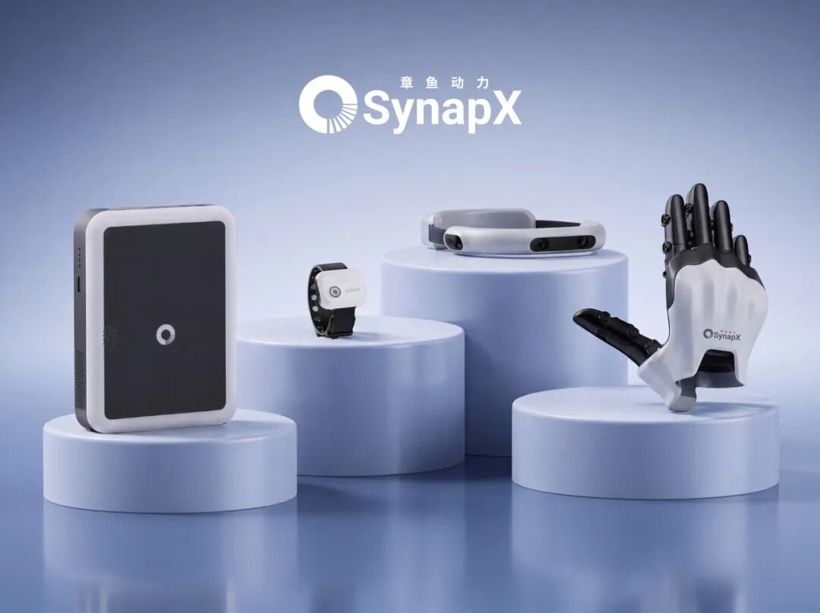
The ten-month-old startup will spend the money on a high-end dexterous-hand production line, with volume deliveries due by year-end.
SynapX, a Beijing startup building dexterous robot hands paired with embodied-AI models, has raised several hundred million yuan in fresh funding, with appliance and industrial group Midea among the new investors. The exact amount and the full investor list were not disclosed.
The round is the company's fourth this year. SynapX was founded in January 2026 and closed a seed round of nearly 50 million dollars two months later, backed by Horizon Robotics, Hillhouse, Xiaomi's strategic investment arm, Shunwei and Linear Capital. A strategic round led by Singapore's K3 followed in April, and a 50-million-dollar round in June. With the latest raise, total funding has passed one billion yuan.
The money goes into manufacturing, not demos. SynapX said the proceeds will fund a high-end dexterous-hand production line and further embodied-model research. The company plans to begin volume production and delivery of its integrated hand-and-AI platform by the end of 2026, and said in October it had already won mass-production orders from a leading overseas embodied-AI customer.
SynapX, also known as Octopus Power, does not build complete robots. Its pitch is a closed loop it calls brain-hand-data: the SYNWorld embodied world model for perception and decisions, the tendon-driven OctoH-Hand for manipulation, and the OctoSense system for collecting human movement, vision and contact data to train models. The three parts were unveiled at the 2026 World Robot Conference.
The bet is that hands, not whole humanoids, are the bottleneck. A general-purpose robot is only as useful as its grip, and dexterous hands remain one of the hardest and most expensive components to make at volume. Midea, which already makes precision reducers and servo motors, is buying into that component layer rather than into a robot brand.
The company is candid that the integration is not finished: its founder and chief executive said in October that its models did not yet fully drive its own dexterous hands, and called year-end integration a key task. The new production line will test whether the brain-hand-data loop can ship as a product, not just a demonstration.