Speedbot's Weldroid-W1 Is a Humanoid Robot That Welds Inside Ships
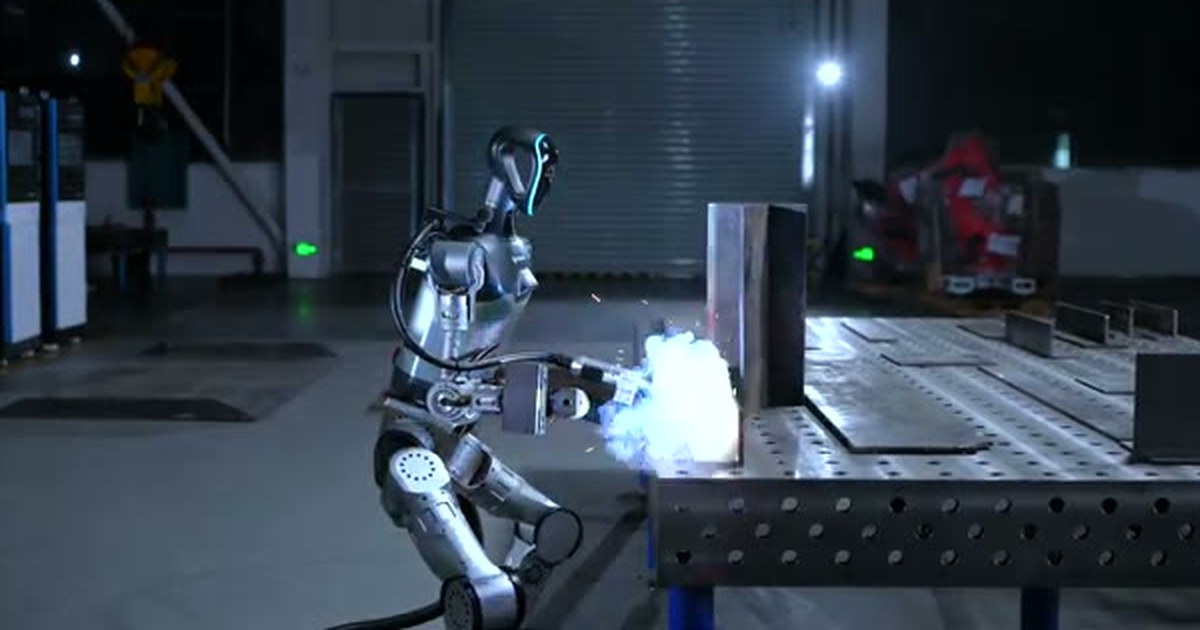
The 1.7-meter, 27-joint humanoid squats and kneels to reach welds fixed robots cannot, with shipyard trials planned before the end of the year.
Speedbot, a robotics company based in Changsha, has built a humanoid for one of the hardest jobs in heavy industry: welding inside a ship. The Weldroid-W1, a 1.7-meter bipedal robot unveiled in early November, is designed to walk into ship hull blocks — cramped, uneven spaces where fixed welding robots cannot reach — and weld flat, vertical and overhead seams. It is still a prototype, with no orders yet, and Speedbot says shipyard trials will begin before the end of the year.
The numbers are close to a human welder's: 1.7 meters tall, 60 kilograms, 27 degrees of freedom, 10 kilograms of payload per arm and 30 kilograms in total. Its sensor set — one LiDAR, three depth cameras and a 3D line-scan camera — finds weld seams in three dimensions, and the robot navigates uneven floors, steps over obstacles, climbs metal stairs and switches between standing, squatting and kneeling to take the posture each weld needs. Control is layered: task planning runs in the cloud at 1 Hz (S2), motion planning on board (S1), low-level control beneath that (S0).
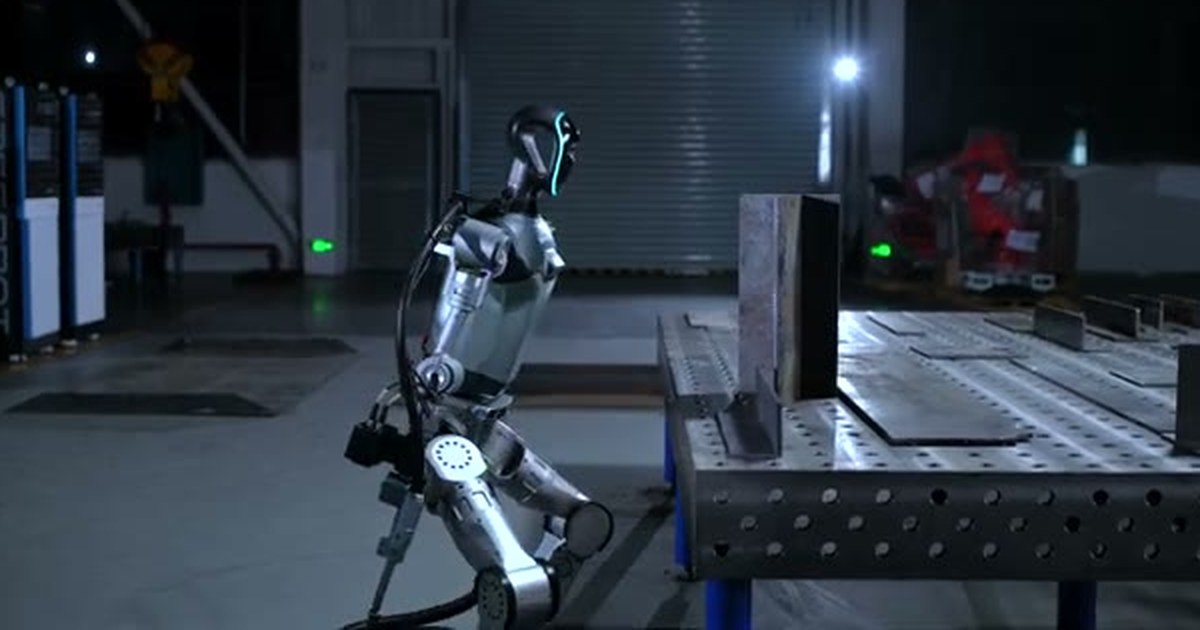
The pitch lands where shipyards are short of hands. About 30 percent of shipyard welder positions sit unfilled, many welders are over 45, and welding eats roughly 40 percent of a ship's build hours while less than 20 percent of it is automated. The plan is not to replace welders but to move them up a level: the robot takes the repetitive, hard-to-reach seams while skilled welders supervise, judging the work on weld quality, cost and uptime.
Welding still produces fumes and heat — the point is not that the robot makes them disappear, but that a machine stands in them instead of a person. The demo video carries the logos of China Shipbuilding and CSSC, a sign of the customer world Speedbot is pitching to. For now, though, the W1 has no orders and no independent performance data: the test that matters is the shipyard trial, and Speedbot says that starts before the year is out.
If the trials hold up, the W1 points at a narrower idea of what humanoids are for — not a general-purpose worker, but a body built for one hostile workplace, sized to fit through the same hatches as the people it works beside.