Skylark Labs Puts a Humanoid on Explosive-Hazard Search, Sweeping With a Standard Metal Detector
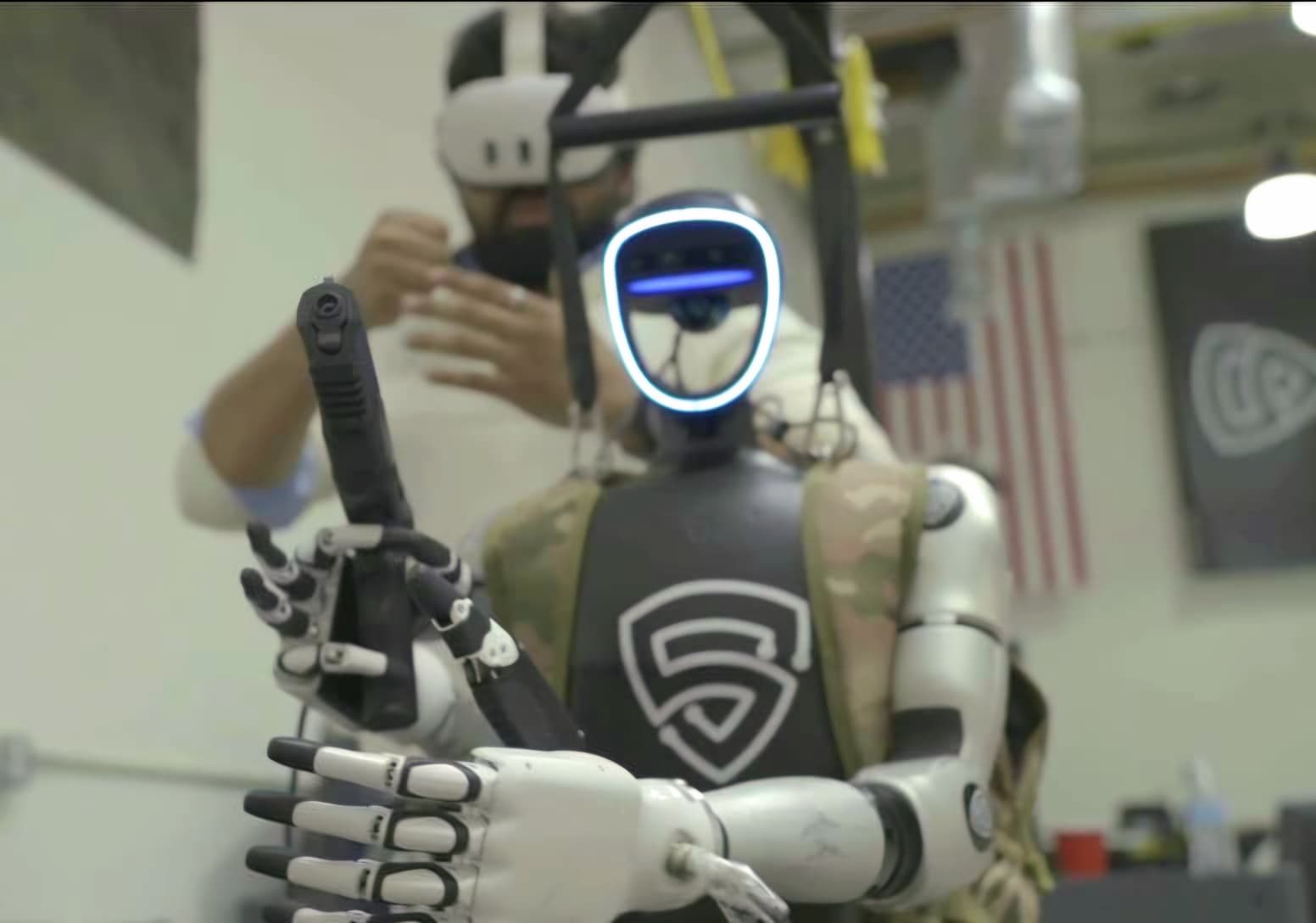
The humanoid picked up the detector, swept the ground and backed off on alert — detection support, not disposal.
Skylark Labs has demonstrated a humanoid robot searching suspected explosive ground with a standard handheld metal detector, sweeping a designated area and stopping and backing off when the detector sounded, under human supervision. The experiment, conducted for an explosive ordnance disposal supplier, ran the full sequence without a separate command for each step.
Visual and audio feedback guided the machine: the detector beep became an input to its next action, linking what the robot sensed to what it did. Company footage shows the humanoid sweeping outdoors alongside a person performing the same search. The point is separation — keeping EOD specialists farther from suspected hazards while they direct and assess the search, instead of being the first person onto unswept ground.
The humanoid form is the argument. Hands, reach and posture let the robot work with equipment designed for people, including detectors EOD teams already carry, rather than requiring tools redesigned around a machine. Tracked EOD robots such as the L3Harris T7 systems the U.S. Air Force began fielding in 2022 still need an operator directing each movement; Skylark is pursuing a machine that carries out an assigned search on its own within that brief.
The learning layer is Skylark's Continual Field-Adaptive Models, known as CFAMs. Specialists demonstrate how to handle familiar equipment and run a search — the detector skill was taught through a few minutes of human demonstration — and the models keep adapting on the device as the robot works, without a separate retraining cycle. In a real-world manipulation test, CFAM delivered about 30 percent higher task success than a standard model, and in a separate evaluation it matched a standard model using just 40 percent of the training data. Performance in new search conditions is still being tested.
The demonstrated work is detection support only. Physical handling and disposal of a suspected device remain development goals, and the platform does not handle, disturb or render safe a suspected device. Skylark's longer-term goal is a team of humanoids dividing a search area under one specialist, coordinated through Hive, its multi-machine framework already deployed in oil and gas operations in the United States, India and the Middle East. For now, the claim is narrower and more testable: send the machine first, keep the specialist in charge.