Pittsburgh airport deploys Skild AI quadrupeds to patrol its terminals
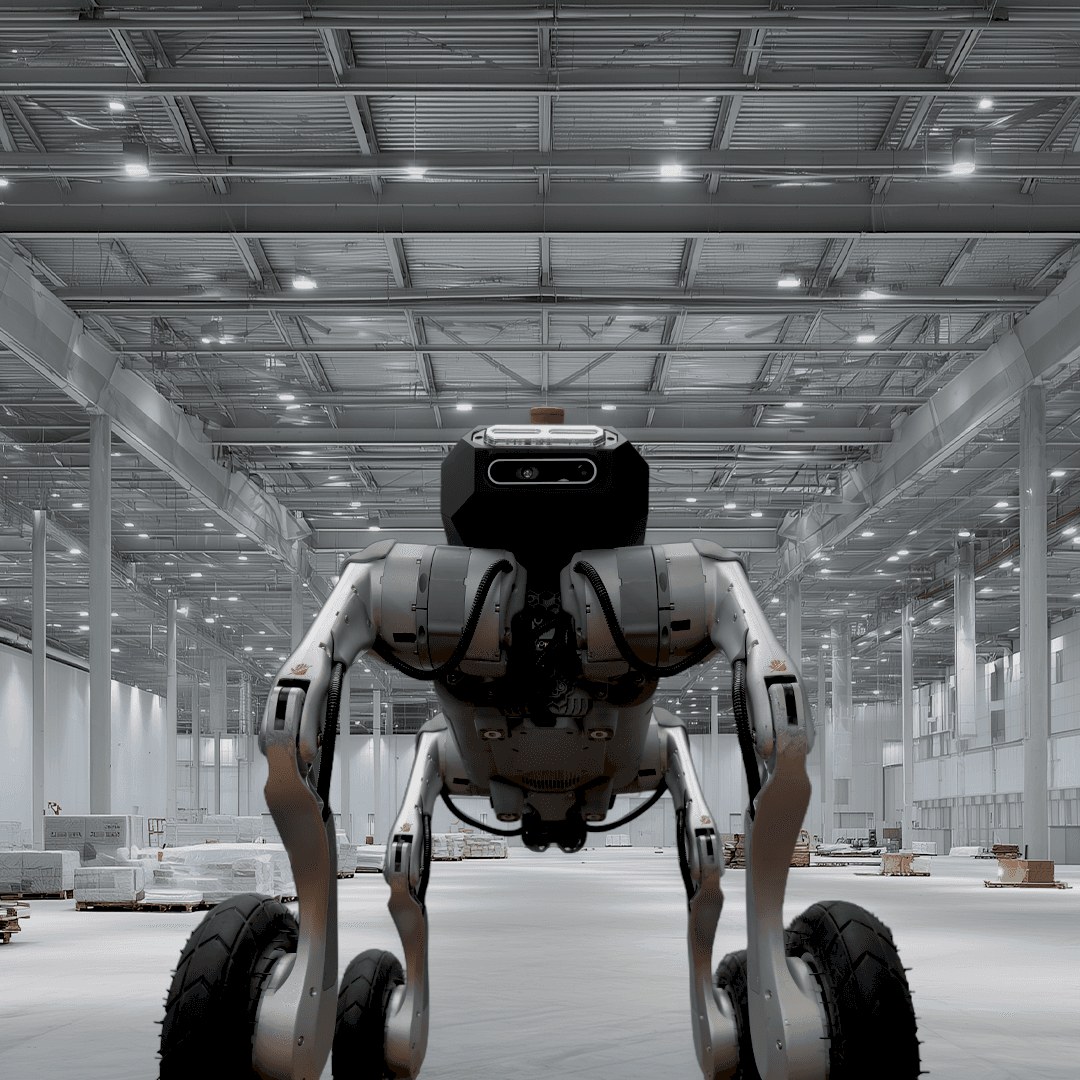
Four-legged robots running Skild AI's autonomy software will monitor air quality, spot spills and flag full trash bins at Pittsburgh International.
Pittsburgh International Airport is putting four-legged robots to work across its terminals. In partnership with Skild AI — the Carnegie Mellon spinout founded by Deepak Pathak and Abhinav Gupta — the airport is deploying quadruped robots to patrol the terminal, monitoring air quality, detecting spills and full trash bins, and flagging anomalies to operations staff in real time. One robot is already roaming the concourses; the plan calls for four.
The machines run Skild's adaptive autonomy software with onboard sensors, cameras and AI perception, navigating the terminal without a handler. The project runs through the airport's xBridge innovation program, which pairs the airport with technology firms to move research out of the lab and into live operations — in this case, quite literally, into the terminal.
Pittsburgh is not the first airport to experiment with embodied AI. Miami rolled out an AI hologram concierge earlier this year, and San Jose Mineta has been testing a humanoid greeter that answers traveler questions in more than 50 languages. The robots, notably, stay on the ground side of the equation: since May, Southwest Airlines has barred passengers from bringing humanoid or animal-like robots onto flights, regardless of size.
For now the deployment is a multi-phase pilot rather than a finished rollout, with Skild and airport staff evaluating the robots across different terminal jobs. For Skild, whose pitch is a single generalist ‘brain’ for any robot body, an airport terminal — crowded, unpredictable, and full of edge cases — is as good a stress test as it gets.