Sharpa plans 30,000-robot deployment across restaurants, retail, and hotels
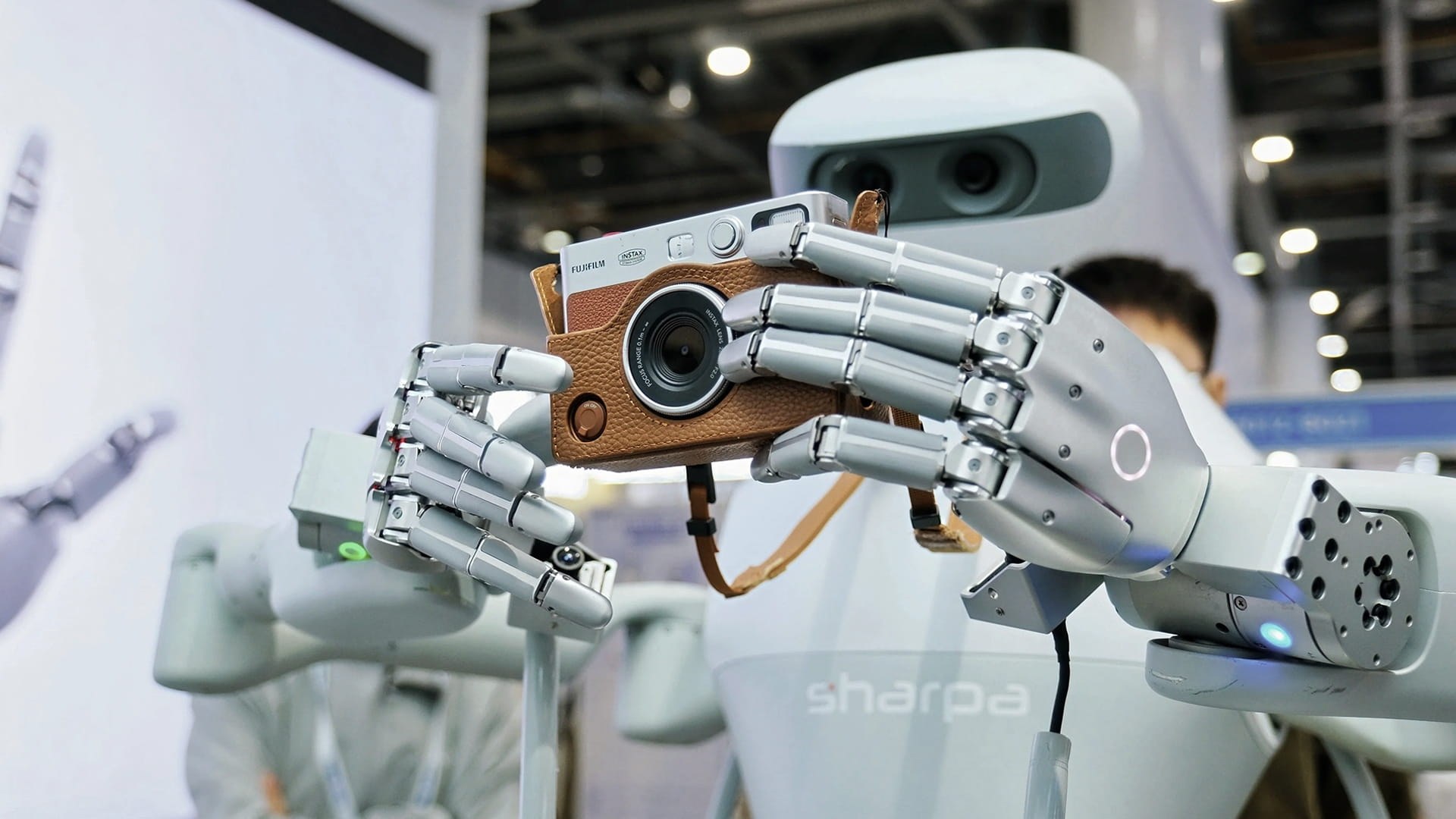
The Hesai-founder-backed startup says two things decide deployment: robots must work without changing the environment, and they must keep working.
Sharpa co-founder Shaoqing Xiang said at the opening-ceremony roundtable of the 26th China International Industry Fair that the company's next step is deploying 30,000 robots across food-service, retail, and hotel scenarios. He did not give a timeline.
Xiang framed deployment around two requirements: no retrofitting of work environments, and continuous operation. In August, Sharpa put a robot to work at a Dairy Queen ice-cream store on Wujiang Road in Shanghai — a real store that was not modified for the robot — as a first validation that it can keep working in an unadapted setting.
Adapting the environment to fit the robot, he argued, runs against generalization; the goal is for robots to enter new settings and adapt quickly. Sharpa wants business operators who understand operations but not necessarily AI to collect small amounts of data with company-provided tools, helping robots settle into specific jobs. Human operation data, simulation data, and real-machine data feed each other, building the seed of intelligence, he said.
Sharpa was founded at the end of 2024 by Hesai Technology's three co-founders — David Li, Shaoqing Xiang, and Kai Sun — to build general-purpose robots and core components: tactile dexterous hands, full robot bodies, data-collection devices, and dexterous-manipulation AI models. On August 28, 2026, the company announced a raise of more than RMB 4.5 billion; startup database IT Juzi puts its post-money valuation at about RMB 22 billion.
The roundtable also touched the data question: Alibaba Cloud founder Wang Jian urged industrial companies to open up industrial data for AI training, drawing a parallel with how the internet and open source pooled language and code resources; Haier chairman Zhou Yunjie signaled willingness from the audience. Wang Xingxing said AI needs many kinds of data, while companies have confidentiality requirements.