Robo World 2026 opens in Seoul with Rainbow's RB-Y2 mass-production target and UBTech's $30,000 companion humanoid
Rainbow Robotics aims to mass-produce its RB-Y2 by summer 2027, while UBTech priced its U1 Pro companion humanoid at $30,000.
South Korea's largest robot show opened on Wednesday at KINTEX in Goyang, northwest of Seoul, with 402 companies across 1,198 booths, a record for the event. Robo World 2026 runs through November 7 and is hosted by the Ministry of Trade, Industry and Energy, with this year's edition built around physical AI and AI-driven manufacturing.
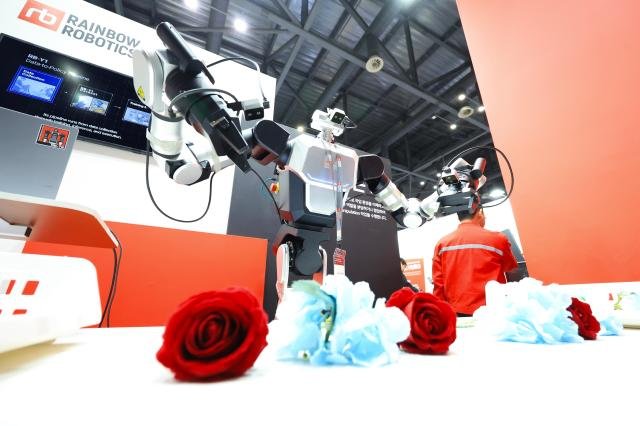
The most concrete production news came from Rainbow Robotics, the Samsung Electronics-backed maker of the RB-Y1 mobile humanoid. The company has sold nearly 200 RB-Y1 units worldwide and aims to secure safety certification for its next-generation RB-Y2 and begin mass production by next summer. Rainbow makes almost all of its parts in-house, motors included, with only some gear reducers still bought from Korean and Japanese suppliers, and it plans to keep its focus on manufacturing through about 2030 while testing robots with farm machinery maker Daedong, Samsung Medical Center and the Daejeon bakery chain Sungsimdang.
Rainbow deliberately puts its working humanoids on wheels rather than legs, a safety-first choice its executives contrast with dancing robots: a machine that falls over on a factory floor is a hazard, not a demonstration. The RB-Y1 on display sorted flowers, and the company acknowledged the AI sorting still makes mistakes, with more data from real workplaces needed to improve it.
Chinese exhibitors drew the crowds. Three Unitree G1 humanoids danced in step to a K-pop song while another played ping pong with a child, and AGIBOT's X2 mirrored the movements of a visitor wearing a VR headset. Robotis staged its AI Sapiens humanoids on stage, and Aei Robot walked its ALICE biped almost all day to demonstrate actuator endurance, with a redesigned upper body able to lift 20 to 30 kilograms.
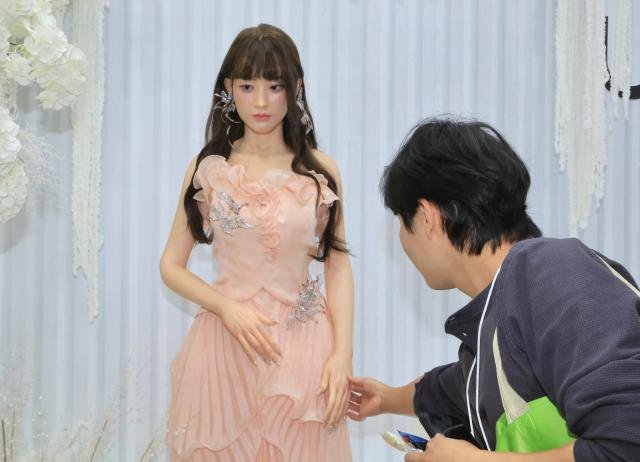
UBTech brought its companion humanoid, the U1 Pro, built to sit on the sofa rather than perform on stage. The company priced the Pro at about $30,000 and the Ultra, a version that can walk and dance, at about $90,000, and said it had collected 13,361 pre-orders before the June launch. The robot converses through Alibaba's Qwen model and currently relies on translation for English and Korean; UBTech said it should speak Korean as early as December as it prepares to begin sales in the country with local partner Polaris AI. The U1 series launched in Shenzhen in June under UBTech's consumer brand UWORLD, and the company sells the Pro only to adults.
The show's split screen reflects two different strategies. Korean exhibitors pitched machines with their own software and AI built in, while several Chinese exhibitors offered hardware that local partners could adapt with language and content. South Korea already has the world's highest robot density, with 1,220 industrial robots per 10,000 manufacturing workers in 2024, according to the International Federation of Robotics, which also counted 354,000 industrial robots installed in China in 2025, 59 percent of the global total.