Taiwan's NCSIST Turns Ghost Robotics Dogs Into a Recon, LiDAR and Armed Trio
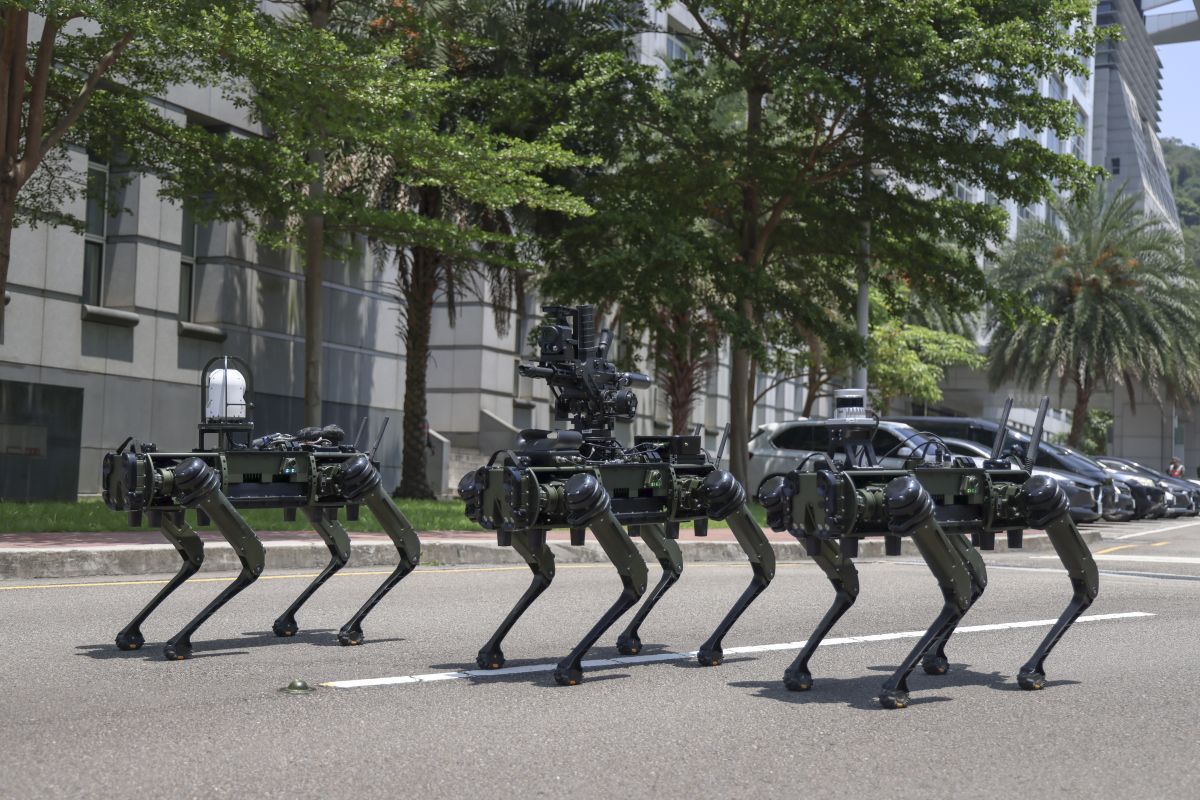
NCSIST's three quadruped variants — LiDAR mapper, reconnaissance scout and armed firepower dog — run on a licensed Ghost Robotics platform.
Taiwan's National Chung-Shan Institute of Science and Technology unveiled three robot dog variants on June 2 at a Ministry of National Defense press conference in Taipei, and showed the firepower and reconnaissance types again on November 7 at the Aegis Cup defense AI competition at National Cheng Kung University in Tainan. The trio — a LiDAR mapper, a reconnaissance scout and an armed firepower dog — turns a US quadruped platform into a single recon-and-strike package for base patrol, coastal defense and urban security.
The base platform is not Taiwanese. The dogs run on the Vision 60 quadruped from US company Ghost Robotics, used under a US technology license, with NCSIST developing the mission payloads on top. The institute has formed a "Join Lab" with Taiwanese manufacturers to localize motors, lenses and AI compute modules under the license, with mass production the goal.
The LiDAR dog carries a 32-line 3D LiDAR and a thermal imaging module. It patrols on its own, steers around obstacles in real time, senses its environment, detects heat and builds 3D maps — built for all-weather base patrol and site security. NCSIST describes the platform as having excellent terrain adaptability and long-distance patrol capability.
The reconnaissance dog carries NCSIST's own electro-optical payload, searching for, identifying and tracking targets and feeding the data back to an intelligent command-and-control system. The firepower dog carries a remote-controlled gun turret designed by NCSIST, fitted with a visible-light camera, a thermal sensor and a laser rangefinder; the demo unit mounted a riot gun. Together, the recon and firepower dogs provide fire support for coastal patrol, airport security, urban defense and riot control.
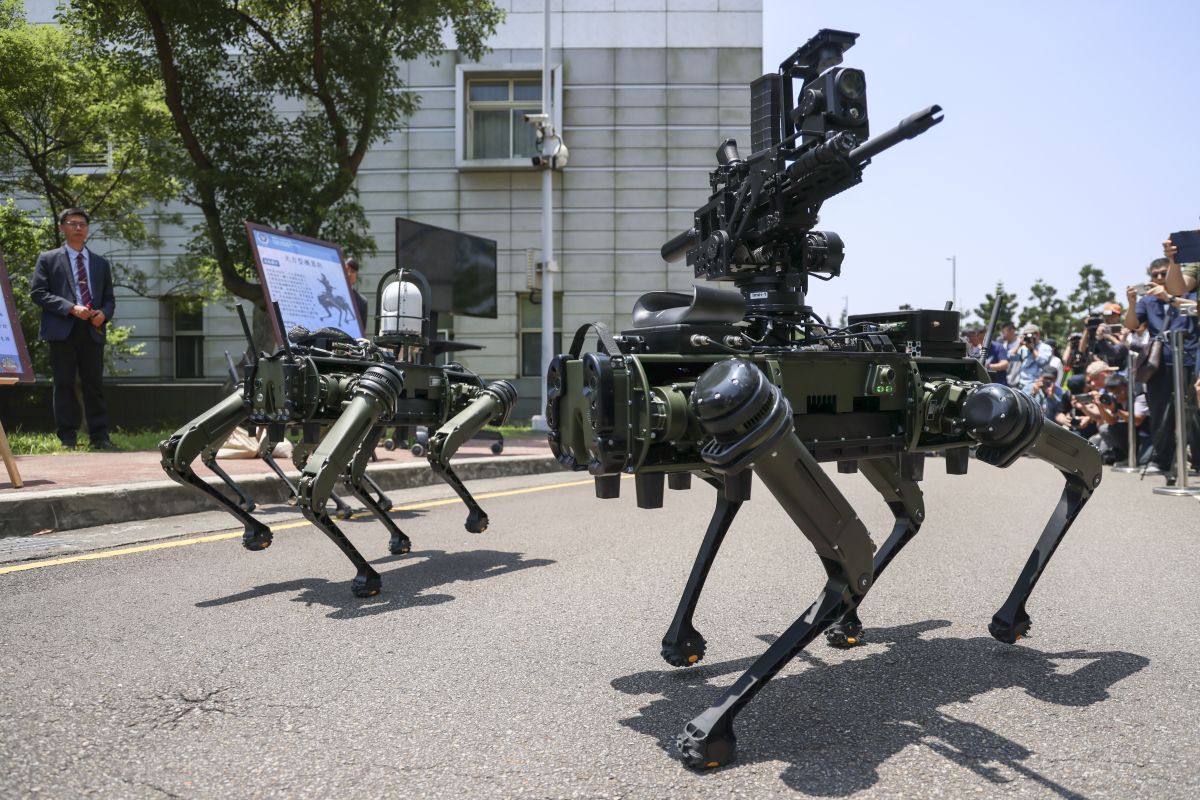
The dogs run about three hours continuously, or eight to ten hours with flexible task scheduling, and NCSIST is researching solid-state batteries to extend range. Next steps include pairing the dogs with drones, unmanned ground vehicles and unmanned boats, and networking dogs together. NCSIST frames the system as "recon-and-strike in one" — reconnaissance plus fire support that keeps personnel out of danger.