Mosaic Emerges From Stealth With $47 Million to Build Surgical Robots That Navigate Blood Vessels
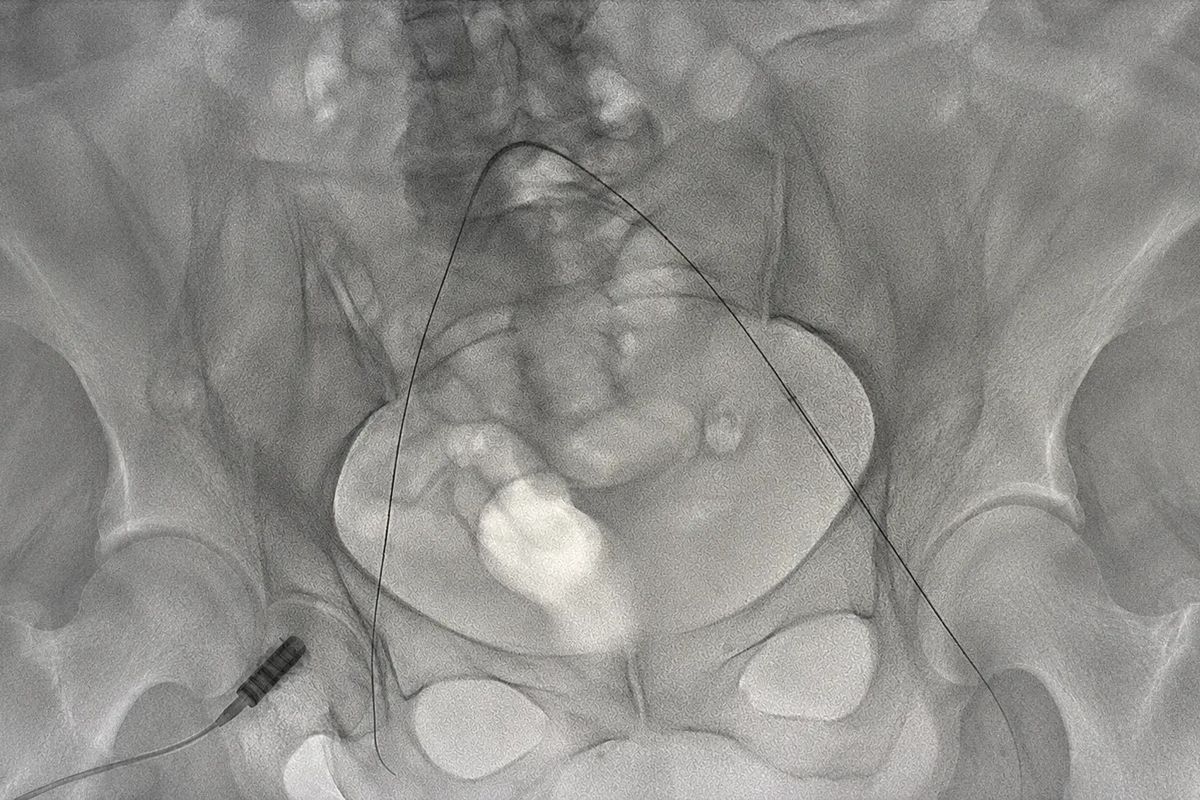
The Stanford-founded startup is building sensing-enabled catheters and spatial intelligence for endovascular surgery.
Mosaic Intelligence Labs, a San Francisco startup building surgical robots that navigate the human body from within, emerged from stealth on November 10 with $47 million in seed funding. The company is developing sensing-enabled instruments, spatial intelligence and robotic control to help physicians guide wires and catheters through blood vessels during minimally invasive procedures.
The $47 million came across two seed rounds led by 8VC and Fundomo, with Lingotto Innovation and Obvious Ventures also investing. The company did not disclose a valuation. The round is large for a seed-stage company, but surgical hardware is a capital-intensive category: Mosaic has no product on the market, no clinical trial and no regulatory filing yet, and the funding will go toward development and hiring across hardware engineering, sensing, perception, machine learning and clinical engineering.
Mosaic starts with endovascular intervention, procedures in which physicians thread flexible wires and catheters through blood vessels to deliver treatment. Inside the vessels, doctors work without a direct line of sight, relying on live X-ray images, preoperative scans and the feel of the instruments in their hands. Mosaic's approach is to give the instruments their own senses, combining sensor data with computation to reconstruct the vascular environment from within and give physicians a continuously updated, three-dimensional view of the anatomy and the instrument's position.
The longer-term aim is a semi-autonomous catheter that can find its own way through blood vessels, with a live 3D map of the circulatory system as the intermediate step. The company says reducing dependence on X-ray imaging would cut radiation exposure for patients and medical staff, and that more reliable navigation could expand the range of treatments delivered through the vascular system. Roboticist Rodney Brooks is an adviser to the company, and Mosaic is working with HonorHealth, an Arizona health system.
Mosaic was founded by Dr. Ileana Pirozzi, chief executive officer, and Dr. Alison “Ali” Kight Mackanic, chief technology officer, who met during their doctoral studies at Stanford. Their work alongside clinicians showed them how much of endovascular surgery depends on individual experience that is hard to capture or pass on. “We kept returning to one question: what would it take to scale the knowledge of the very best surgeons?” Pirozzi said. “We believe that starts with making our machines aware, and turning surgical repetition into experience we can learn from.”
Surgical robotics is drawing larger early checks as investors bet that perception and autonomy can move beyond the operating-room robots of the last decade and into procedures inside the body. Mosaic's next 12 to 24 months of preclinical work will show whether the funding bought a product or only a thesis: the company has shown no clinical data, and its stated goals remain goals.