Lute Raises $20M to Give Robots a Sense of Touch
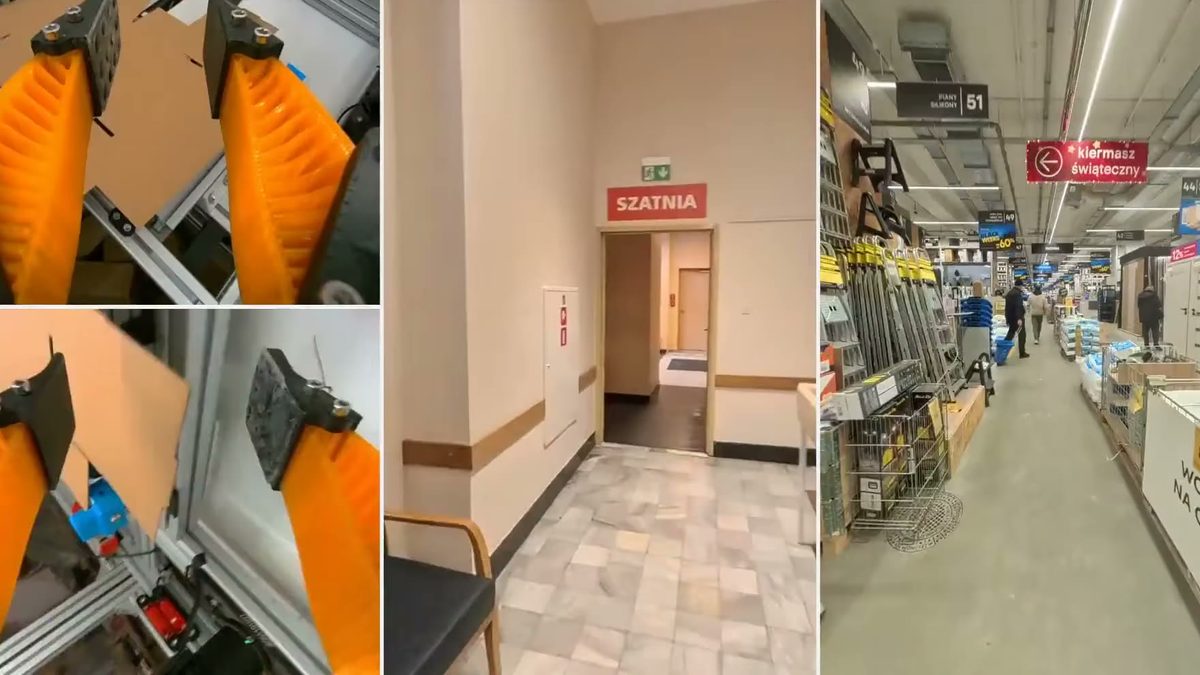
The Warsaw and Bay Area startup says its touch-first model matched open-source leader Pi0.5 on dexterous tasks with a fraction of the training data.
Lute, a startup building touch-focused foundation models for robots, has raised $20 million across pre-seed and seed rounds. OTB Ventures co-led the seed round with FORWARD.one, and Seedcamp, Credo Ventures, Naval Ravikant, Inovo VC, ff Venture Capital and Borusan Ventures also took part. The money will expand tactile data collection, improve Lute's models and support customer deployments.
The pitch starts from a gap in how robots perceive the world. A robot that relies mainly on vision cannot tell how hard it is gripping, whether an object is starting to slip, or whether what it holds is soft or fragile. Lute builds its models around touch instead: compact, soft, skin-like sensors co-designed with a partner feed a portable data-collection rig, and its first model, Lute-0, learns from video how scenes change and turns that learning into robot actions.
OTB said Lute-0 matched Pi0.5, which it describes as the leading open-source robot model, on dexterous tasks after pre-training on about one-twentieth of the data and one-quarter of the training steps. That comparison comes from the investor's account of Lute's own tests, not an independent benchmark, and the company has not published a full evaluation. The claim, if it holds up, is that touch data buys efficiency: fewer demonstrations to reach the same grasp.
The company is already selling deployment, not just models. Ten months after starting, Lute is deployed at what OTB calls Europe's largest automotive retail distributor, a business with $6 billion in annual revenue, its models also operate in hospital corridors, and it is working on site with large retailers. The software is not tied to one hardware platform: it is built for the system integrators that put robots into operation, guiding them through hardware selection, task definition and on-site retraining.
Each deployment doubles as a data source. Lute's software monitors every task, pauses when something goes wrong and hands control to a remote operator. Successful tasks and corrected failures then become training data, with the learning intended to carry from one site to the next. That loop is the core of OTB's investment case: dependable operation at customer sites as a source of value in its own right, alongside advances in model capability.
The founders combine research and production experience. Chief executive Pawel Budzianowski holds a machine-learning PhD from Cambridge, previously led PolyAI's AI team taking conversational AI from research into production, and co-founded K-Scale Labs, which builds affordable open-source humanoid robots. Chief technology officer Krzysztof Walas was an associate professor at Poznan University of Technology and headed the Physical Interaction Robotics team at IDEAS NCBR. The 16-person team is split between Warsaw and the Bay Area and includes four PhDs and two Informatics Olympiad laureates.