Ex-NVIDIA GR00T researchers raise $90M seed to build a universal robot brain
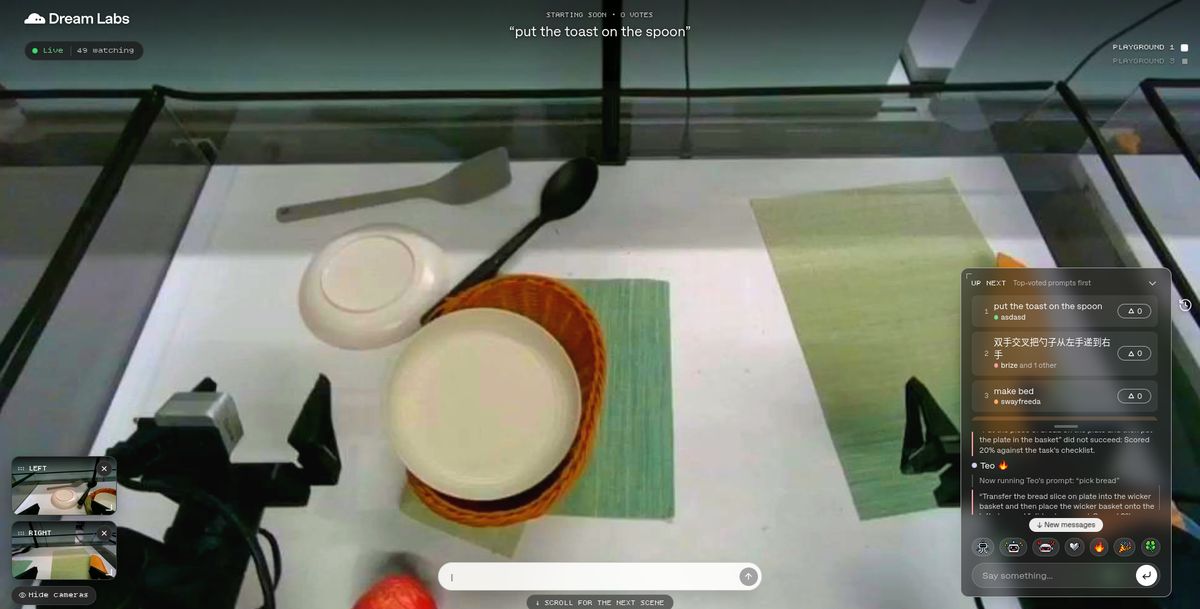
Dream Labs launches Dream-1 and a public API that turns camera feeds and plain-English instructions into motor commands on robots it has never seen.
A team of former NVIDIA robotics researchers has come out of stealth with $90 million in seed funding and a bold pitch: a single foundation model that can operate robots it has never encountered before. Dream Labs, founded in 2026 and based in San Francisco, says its Dream-1 model takes a robot's camera feed and a plain-English instruction and produces motor commands directly, with no robot-specific training. B Capital and Kindred Ventures led the round, joined by A.Capital, Unusual Ventures, SV Angel, Wing VC, Scribble VC, and angel investor Adrian Aoun.
The technical bet is video prediction. Instead of learning from machine-specific teleoperation data, Dream-1 trains on video of people performing everyday tasks — what co-founder and CEO Joel Jang calls human egocentric training data — and learns to predict what happens next, then converts that prediction into physical actions. Because the knowledge lives in video rather than in one machine's joint trajectories, the company says skills transfer across hardware: out of the box, Dream-1 can drive any gripper-equipped robot, zero-shot. Demonstrated tasks today are tabletop work — picking, placing, folding laundry — with wheeled mobile robots and dexterous hands on the roadmap.
Alongside the financing, Dream Labs opened three products to the public. Dream API is billed as the first publicly available API for a robot foundation model: developers connect a compatible robot, send instructions in plain language, and Dream Labs runs the model in its own data centers, charging $3 per hour for the full model and 75 cents per hour for a lightweight version. A fine-tuning service takes a small batch of demonstration video and returns a tailored model within hours for unsupported hardware or new skills. And a browser-based Robot Playground lets anyone type commands to a robot in the company's San Francisco office and watch it respond live and unedited.
The founders previously led NVIDIA's GR00T robotics research program and worked on projects including DreamZero and World Action Models. More than 20 hardware partners are on board, with supported robots priced between about $2,000 and $10,000; the company says most of the new capital will go toward computing capacity as it expands the robots and tasks Dream-1 supports. "The hardware is ready. What's been missing is a brain any robot can use," Jang said. The open question is whether a model trained on human video holds up on factory floors, where the cost of a mistake is measured in downtime, not wrinkled laundry.