Boston Dynamics names Amazon AI chief Rohit Prasad as CEO
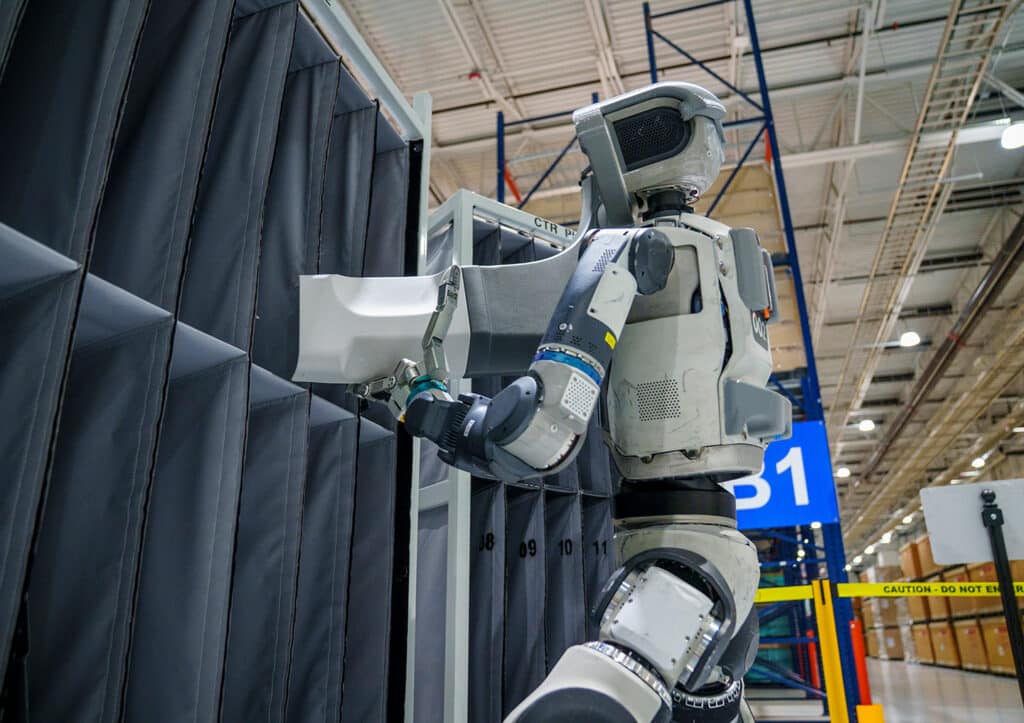
The Alexa and Amazon Nova architect takes the helm of the Hyundai-owned humanoid maker, effective October 7, as the company pushes its Physical AI commercialization strategy.
Boston Dynamics has appointed Rohit Prasad as chief executive officer, effective October 7, 2026, the company announced on October 6. Prasad is the former Amazon senior vice president and head scientist for Alexa and artificial general intelligence, and his arrival puts one of the most seasoned AI product leaders in the industry at the head of the Hyundai Motor Group-owned robot maker.
Prasad spent 12 years at Amazon, where the company says he was instrumental in building Alexa from its earliest days into a consumer AI service used in hundreds of millions of households, and more recently led development of the Amazon Nova family of foundation models for enterprise customers. Before Amazon, he spent nearly 14 years at Raytheon BBN Technologies leading machine-learning research for U.S. government and commercial programs. He has lived in the Boston area for more than 25 years.
He succeeds Robert Playter, who retired in February after more than three decades at the company; chief financial officer Amanda McMaster had served as interim CEO. Prasad is also expected to join the Boston Dynamics board, subject to approval.
The company framed the appointment as an acceleration of its Physical AI strategy — pairing its robotics hardware with advanced AI to commercialize intelligent machines at scale. “Boston Dynamics is uniquely positioned to advance Physical AI through its world-class robotics expertise,” Prasad said in the company’s announcement. Hyundai Motor Group vice chair Jaehoon Chang, who chairs the Boston Dynamics board, said the combination of Boston Dynamics’ robotics, Prasad’s record of turning AI into products at global scale, and Hyundai’s manufacturing and logistics capabilities gives the company “a powerful foundation to build and scale Physical AI.” Those are the company’s characterizations, not independent assessments.
The leadership change lands as Boston Dynamics moves its electric Atlas humanoid toward real industrial work — the company recently showed Atlas performing automotive production tasks at Hyundai facilities — while Spot and Stretch continue in inspection and logistics roles. Hyundai said in January it aims to build a factory capable of manufacturing 30,000 robot units a year by 2028, according to Reuters, a target that will test whether Prasad’s product-scaling playbook transfers from software to physical machines.