Boston Dynamics Taps Former Amazon AGI Lead Rohit Prasad as CEO to Finally Crack Physical AI
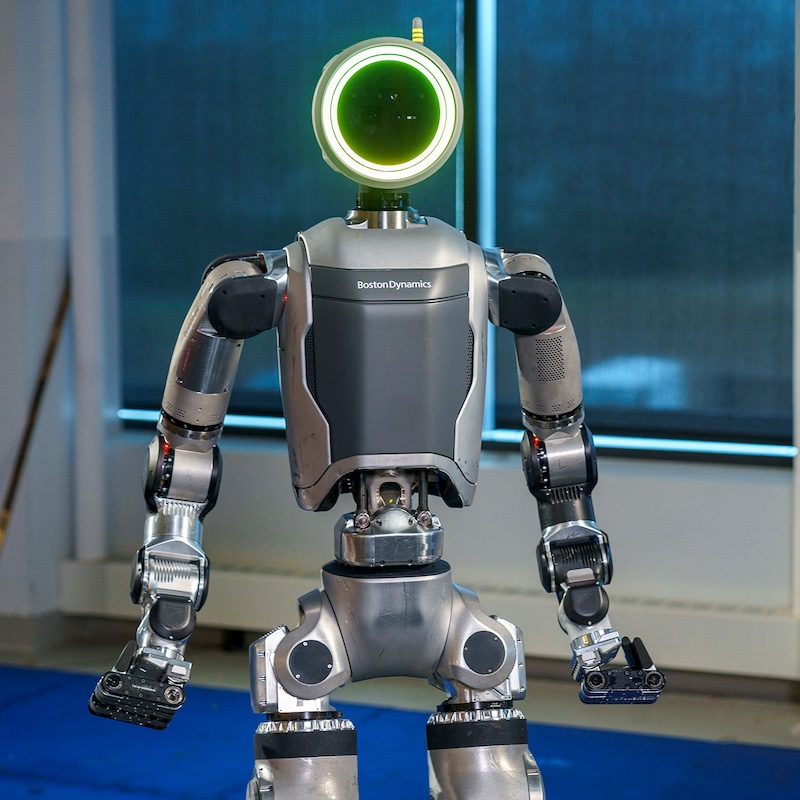
Boston Dynamics built the best robot body in the business. By hiring the man who scaled Alexa into hundreds of millions of homes, Hyundai is betting the next decade will be won by whoever builds the best robot brain.
For more than a decade, Boston Dynamics has reigned as the undisputed viral king of the internet. If you’ve spent any time on YouTube over the past ten years, you know the drill: an Atlas robot executes a faultless backflip, pirouettes across scaffolding, or absorbs a hockey stick jab from an off-screen engineer. It was engineering art.
What it wasn’t, however, was a commercial juggernaut.
Now, Boston Dynamics’ corporate parent, Hyundai Motor Group, wants to close the gap between hardware magic and real enterprise scale. The Waltham-based robotics trailblazer announced on October 6 that it has named Rohit Prasad — former Amazon Senior VP and Head Scientist for Artificial General Intelligence (AGI) and Alexa — as its new Chief Executive Officer, effective October 7.
Prasad steps into a seat left by longtime chief Robert Playter, who exited earlier this year, succeeding interim CEO Amanda McMaster. But more importantly, his arrival marks a deliberate inflection point: the hardware era of robotics is over; the “Physical AI” deployment war has officially begun.
The Brain Transplant
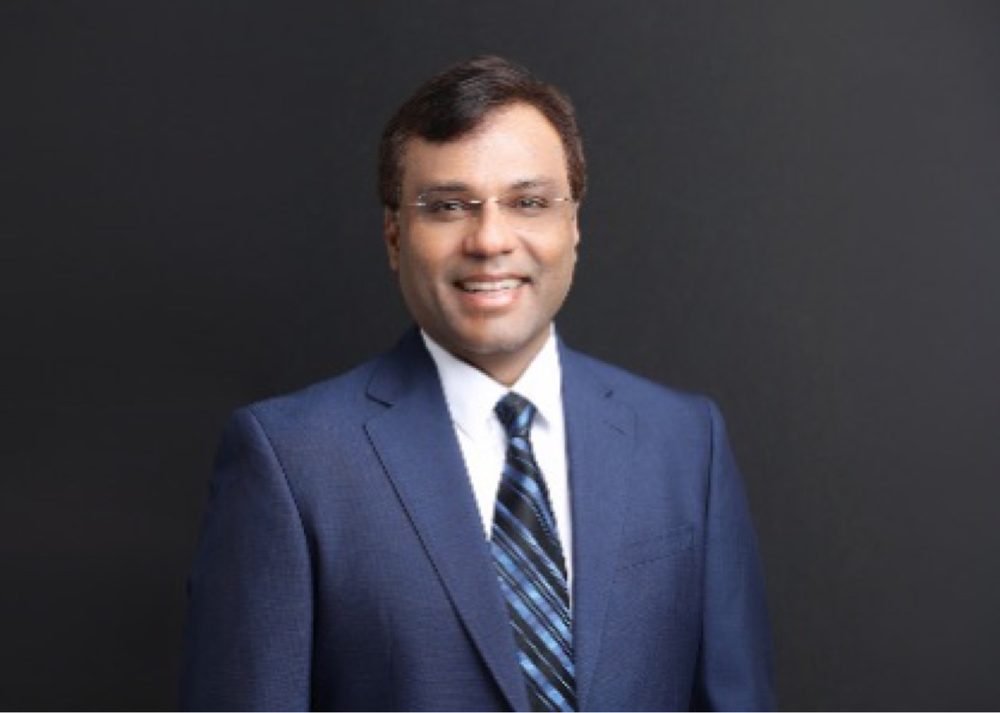
On paper, hiring a speech-and-language AI pioneer to run the world’s most sophisticated mechanical locomotion company might look like an odd fit. Prasad made his name scaling Amazon Alexa from an R&D moonshot into hundreds of millions of living rooms, later spearheading Amazon’s foundational model push and AGI efforts. He isn’t a mechanical engineer.
And that is precisely the point.
Boston Dynamics already solved the hardest dynamic controls problems in robotics. Its four-legged Spot inspects offshore rigs and industrial substations; its warehouse-arm Stretch unloads pallets. And earlier this year, the company retired its iconic hydraulic Atlas in favor of an all-electric version engineered specifically for mass manufacturing.
The problem is no longer how to make a bipedal robot balance on a 2x4. The problem is intelligence at scale: vision-language-action (VLA) models, reinforcement learning in simulation, and autonomous task planning. When an Atlas steps onto an automotive assembly line, it cannot rely on scripted choreography. It needs a neural brain that generalizes across chaotic factory floors.
“Boston Dynamics is uniquely positioned to advance Physical AI through its world-class robotics expertise,” Prasad said in a statement accompanying the announcement.
Translate the executive-speak, and it reads: We built the ultimate body. Now we are installing the brain.
The Hyundai Pressure Cooker
Prasad isn’t taking over an academic lab with infinite runway. He is taking over an asset that Hyundai acquired at a $1.1 billion valuation with very explicit expectations: industrial deployment.
Hyundai Motor Group has sketched out an ambitious timeline, planning to deploy humanoid robots across its global manufacturing footprint, with targets to assemble up to 30,000 units annually by 2028. Reports also indicate Hyundai has been moving to consolidate full ownership by buying out SoftBank’s remaining minority stake.
To turn those ambitions into balance-sheet reality, Hyundai needs someone who knows how to operate consumer- and enterprise-scale software pipelines. At Amazon, Prasad lived through the grueling operational realities of developer ecosystems, cloud compute costs, and edge-device reliability. Those same muscles are required if electric Atlas is going to move beyond staged factory demos at Hyundai’s Georgia Metaplant into thousands of automotive workstations worldwide.
The Crowded Sandbox
The appointment also signals an acute awareness that Boston Dynamics is no longer running an uncontested race.
For years, nobody could touch Boston Dynamics’ dynamic balance. But the explosion of generative AI has flattened the competitive landscape. Tesla is pouring compute clusters into Optimus; Figure AI raised hundreds of millions to put humanoids in BMW plants; Agility Robotics is already running trials with Amazon; and Chinese entrants like Unitree are radically slashing hardware BOM costs.
In 2026, venture capital and enterprise buyers don’t applaud parkour. They track pick-and-place uptime, mean time between failures (MTBF), and cost per autonomous cycle.
Boston Dynamics still owns the gold standard in mechatronics. But with Prasad in the driver’s seat, the company is betting that the winning robotics company of the next decade won’t be defined by how high its machines can jump, but by how intelligently they think on the clock.