Archon Robotics debuts whole-body intelligence for humanoids
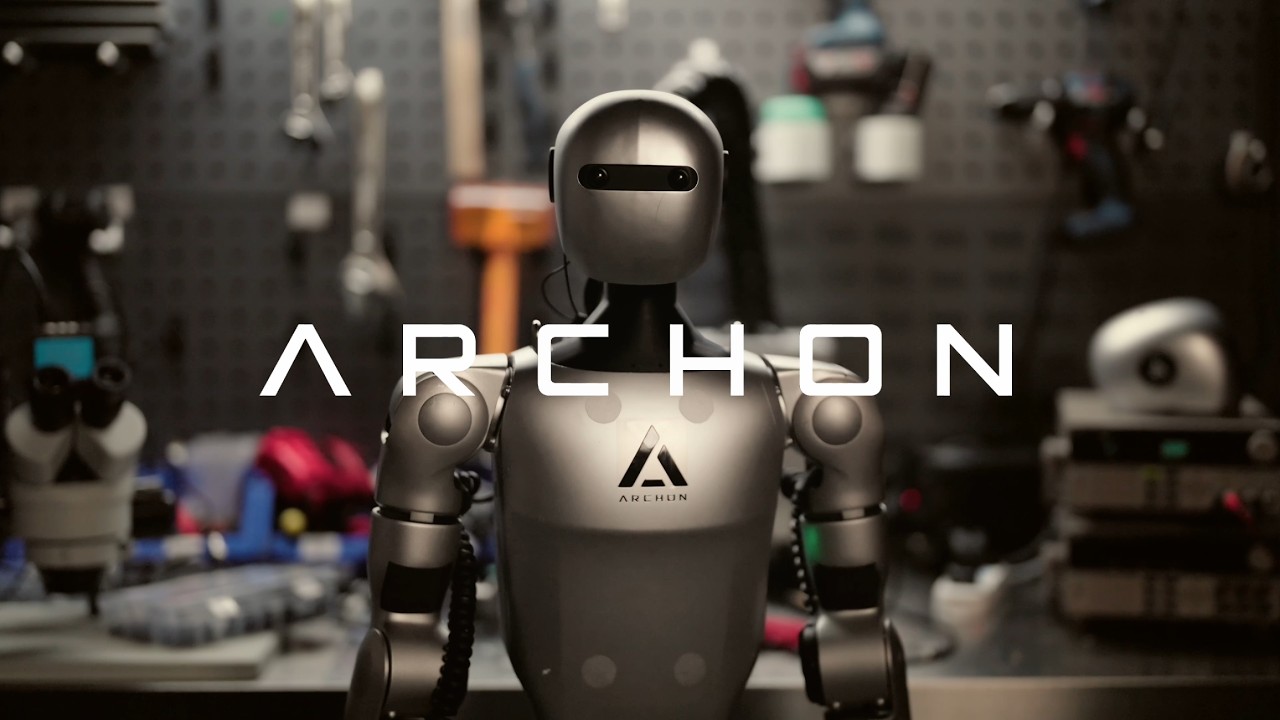
The six-month-old Shanghai startup showed one AI system driving an AgiBot A3, a Booster T2 and a modified Unitree G1 through kitchen chores.
Shanghai-based Archon Robotics, founded in April 2026, has released its debut demonstration of what it calls Whole-Body Intelligence (WBI): an AI system that connects task understanding directly to coordinated full-body motion in humanoid robots. The roughly three-minute video shows an AgiBot A3, a Booster T2 and a modified Unitree G1 picking up objects, climbing steps, clearing tables, operating a dishwasher and organizing a refrigerator across kitchen and dining scenes.
The video highlights two components. S1 handles task understanding, multimodal information and behavioral decisions; S0 handles whole-body motion control, including coordination, stabilization and precise execution. The company describes S0 as the robot's cerebellum, translating goals into movements the body can execute while staying balanced. A July technical blog described a broader four-layer framework that also includes task planning and motion generation; the debut video concentrates on S1 and S0.
Training starts from large-scale human whole-body motion data for pretraining, followed by real-robot data for post-training. The company's data platform collects human demonstrations across multiple Chinese cities, with automated checks, human spot checks and review of flagged samples before training. The material also includes DAgger corrective data: demonstrations of recovering from mistakes and resuming tasks, alongside successful runs. The company says the full demonstrations run autonomously at normal speed, while the segments explaining S0 and DAgger include teleoperation.
The founding team comes from autonomous driving. Founder and chief robot officer Hongyang Li is a Hong Kong University assistant professor whose UniAD end-to-end autonomous-driving project won best paper at CVPR 2023; co-founder and head of AI Li Chen also worked on UniAD, and co-founder and CEO Tianyu Li previously worked on Huawei's ADS 4.0 driving system. In June the company closed a seed round of several hundred million yuan backed by ZhenFund, Gaorong Ventures, IDG Capital, 5Y Capital, the Gobi-HKU joint fund, MiraclePlus and Shanghai Innovation Institute, earmarked for foundation-model research, multimodal data collection and hiring, with an open-source humanoid foundation model planned within the year.
What the video does not show matters as much. The company has disclosed no task success rates, human intervention counts, dataset sizes or head-to-head results across the three robot platforms — and several robots sharing one room does not establish that they run identical model weights or coordinate as a team. A polished demo is an introduction, not a performance report; whether one brain can truly drive many bodies will only become clear once the promised open-source model lands and third parties can test it themselves.