Unitree's Wang Xingxing: physical AI could break through within one to three years
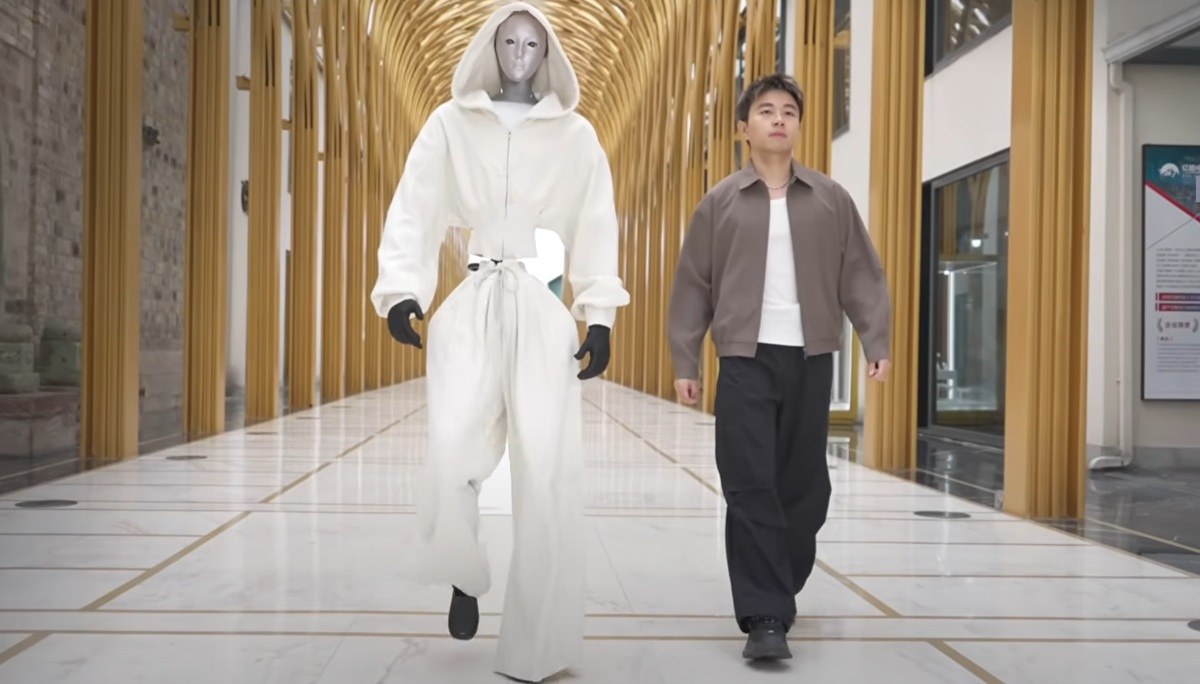
At Unitree's Hangzhou conference, the founder demoed GPT-6 driving robots with zero training and unveiled a robot self-improvement system.
Wang Xingxing, founder, chairman and chief executive of Unitree Robotics, said on October 22 that physical AI is already showing signs of being cracked, with a breakthrough likely within one to three years. Speaking at the keynote of the 2026 World Physical AI Conference and Unitree Partner Ecosystem Conference in Hangzhou, he said embodied intelligence's 'ChatGPT moment' could arrive as soon as next year.
To make the case, Wang showed live demonstrations of Unitree robots running GPT-6 with zero additional training: painting, playing Go and chess, planning navigation and recognizing color palettes. The point, he argued, is that top AI models have already broken through in the mathematical realm and are beginning to solve planning problems in the physical one. He expects that by the end of this year or next, robots will follow spoken commands like tidying up a room.
The centerpiece of the keynote was 'Unitree Rehearsal,' an autonomous feedback system the company calls its most important project this year. The proposed loop has AI read research papers, generate code and test it in simulation before running physical robot trials, with humans still in the evaluation loop judging performance and supplying feedback. The goal is to replace labor-intensive manual programming with a continuous, self-reinforcing development cycle — and ultimately to let advances in AI models translate into practical robotics capability with far less human involvement.
Wang also launched the 'Yuchuang Initiative,' opening recruitment to embodied-AI entrepreneurs with core technologies, with a plan to incubate more than 200 ecosystem companies within five years. He argued that once physical AI reaches its tipping point, robot hardware must scale to tens of millions of units a year, making data, computing power, chips and energy the critical resources to secure now.
The keynote was notably sober about the present. Wang acknowledged that Unitree is currently lagging in the real-world application of physical AI models, identifying software — not hardware — as the industry's primary bottleneck. The backdrop is a market dominated by Chinese makers: a Chinese humanoid industry body reported this week that China accounted for 97% of global humanoid shipments in the first half of 2026, even as the U.S. Federal Communications Commission moved last month to ban future imports of foreign-made humanoid robots.