SenseTime's robot-run 'Shaomaigou' stores ride the Golden Week wave: Shanghai sales nearly double, one outlet up 25x
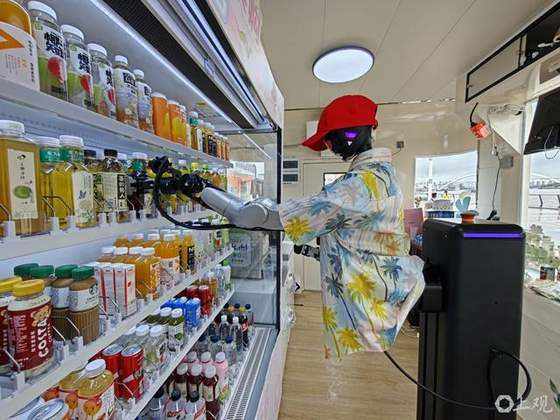
The 'Xiaomai' robot shopkeeper takes orders, grabs goods and chats up customers in as little as 15 seconds — with one human overseeing up to five stores.
SenseTime's retail arm has turned China's Golden Week holiday into a live stress test for its unmanned convenience stores — and the robots passed. The 'Shaomaigou' (SenseMartGo) outlets, operated by the company's smart-retail unit SenseMart, saw total transaction value across Shanghai nearly double versus ordinary days, Xinmin Evening News reports. The standout was a riverside shop on Baoshan Binjiang Avenue, where week-over-week sales came in more than 25 times higher; stores along the Xuhui waterfront and at Baoshan's Sun Moon Light mall also surged as tourists stopped to gawk and buy.
Each shop is staffed — barely — by 'Xiaomai,' a robot shopkeeper that takes orders, fetches goods from the shelves and hands them to customers through a pickup window, with no cashier or clerk on site. At peak hours it can finish a single order in 15 seconds flat. When the crowds thin, it tidies shelves, counts inventory and crunches sales data to decide what to restock. It also plays to the crowd: shaking hands with children, cracking jokes, dancing, even composing couplets for older shoppers, and adjusting how it addresses people based on visual estimates of age and gender.
The economics are the real story. Co-founder and chief scientist Yi Shuai told the paper that each store now averages just 0.2 to 0.3 staff — one person can cover three to five locations, versus two workers per shift at a conventional convenience store. He said prime Shanghai spots pay back their investment in six months to a year. The company counts more than 20 stores across Shanghai, Hefei, Shenzhen, Qingdao and Yancheng, with two more — at the Shanghai Theatre Academy and Bailian's Nanfang shopping center — opening just before the holiday. Ahead of the break, SenseMart also released SenseMart OS, its retail 'physical operating system,' and launched a 'thousand cities, ten thousand stores' expansion plan with ecosystem partners.
The concept itself is not new — Securities Times reported the May debut of the first three Shanghai stores, noting the 15-square-meter format carries over 300 SKUs and that the Baoshan riverside shop averaged 400 orders a day during the May Day break. What is new is the scale of this holiday's validation, plus the company's claim that new-store setup has shrunk from two or three months to one or two weeks, with a goal of measuring it in days. Industry observers quoted in the report caution that the real bottleneck on the road to thousands of stores is maintenance: unlike air conditioners or TVs, broken retail robots have no established rapid-repair network yet.