Otto Group deploys AI robots to tackle its hardest warehouse job: returns sorting
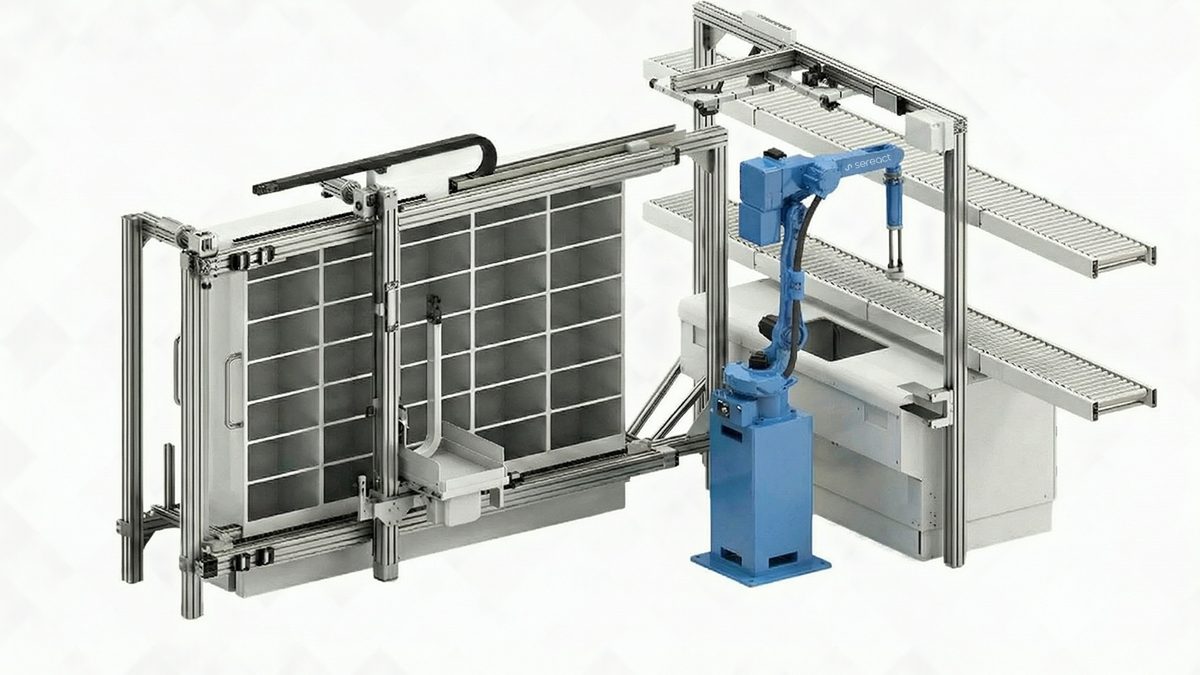
Otto Group will deploy up to 25 AI-controlled dual-arm robots at a Polish logistics center to inspect and sort returned orders, starting with 10.
Otto Group is handing one of the hardest jobs in e-commerce logistics to robots. The German retail group and Stuttgart robotics software company Sereact will deploy AI-controlled dual-arm systems at an Otto logistics center in Poland to inspect and sort returned customer orders. Ten systems go in first; 15 more follow if the initial results hold up, taking the fleet to 25. If the second phase succeeds, Otto will weigh a broader rollout across its logistics network.
Returns resist automation for a simple reason: nothing about them is predictable. Items come back folded, crumpled, or repackaged, and a multi-category retailer's assortment never stops changing. Traditional warehouse automation depends on known products presented the same way every time, and returns offer neither. Sereact's Cortex physical AI model is built for the opposite case: it generalizes to objects it has never seen, deciding in real time how to grasp each item, judge its condition, and route it onward, with no product-specific teaching and no fixed item catalog.
The model improves from the line itself. Real picks from the returns operation are turned into thousands of simulated variants with NVIDIA Isaac Sim and Isaac Lab, then re-rendered by NVIDIA Cosmos world models across garment states, packaging, materials, and lighting. New policies are post-trained on NVIDIA Blackwell GPUs and tested against held-out cases before reaching the robots, so a fix for an item the robot struggled with can arrive as a tested update within days rather than weeks.
The Otto deployment extends a system already running in live returns operations. Sereact's dual-arm stations handle returned fashion items for Zalando at CEVA Logistics sites in Greven, Germany, and Swiebodzin, Poland, and the same training loop was formalized with NVIDIA, Nebius, CEVA, and Zalando earlier in October. Sereact, which raised a 116 million dollar Series B round in 2026, sells its systems as Robotics-as-a-Service: it operates and maintains the robots, while Otto employees shift from repetitive grasping and lifting to supervision, exception handling, and final quality decisions.
The rollout is staged, not a done deal. The second phase of 15 robots depends on the first phase's results, and a network-wide rollout is only under evaluation. The companies have published no throughput or accuracy figures for the Otto deployment, so the performance claims so far are theirs, not independently measured results. For Otto, which has committed 350 million euros to technology and AI over the medium term, the project is a real-scale test of whether physical AI can handle the messiest corner of the warehouse.