Kawasaki unveils Home LEO, a dog-like quadruped robot companion for Japan’s aging households
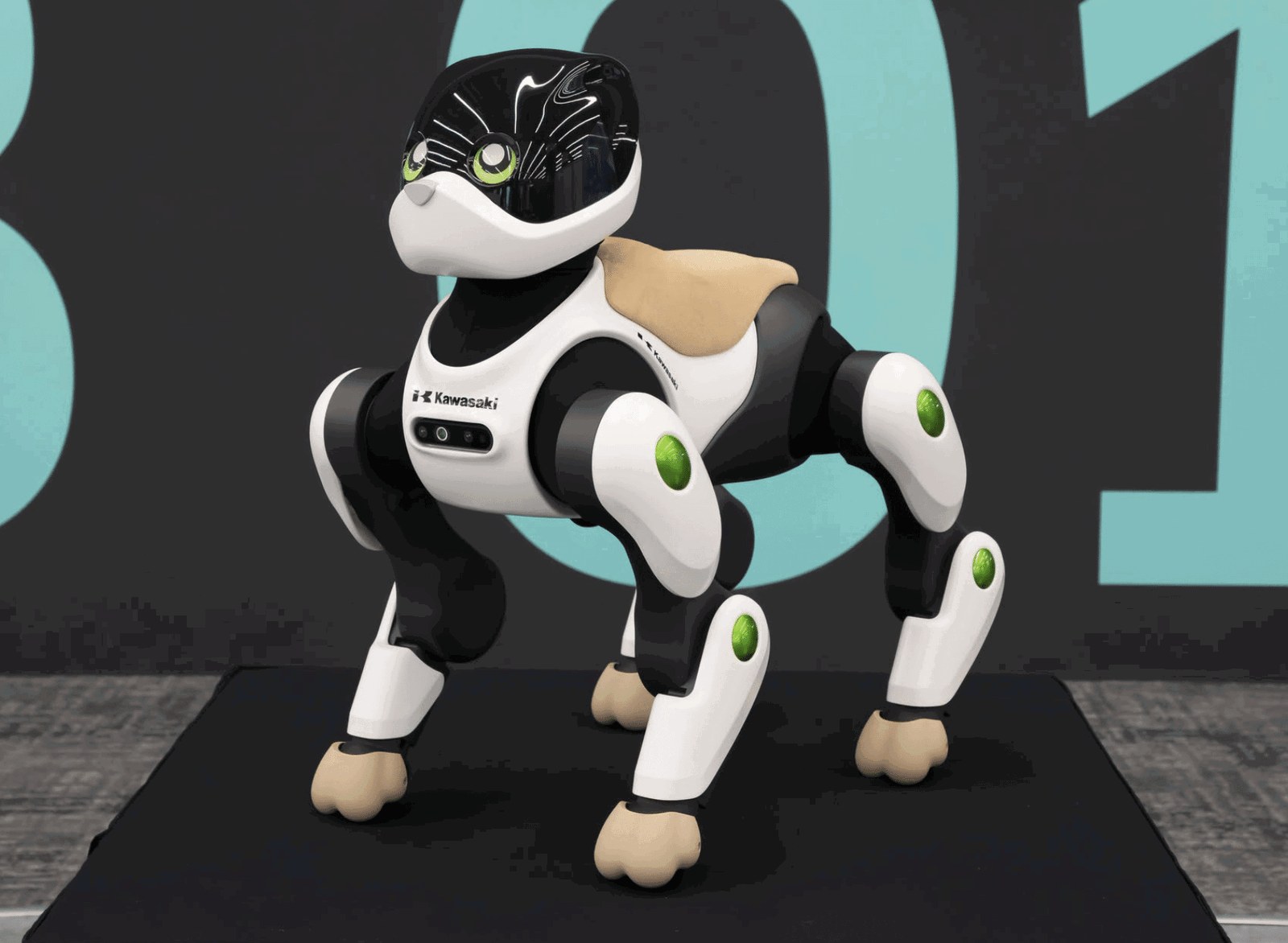
The industrial giant’s new prototype brings physical AI into the home: conversation, fall detection, and daily-life support, with a Japanese launch targeted for fiscal 2028.
Kawasaki Heavy Industries has unveiled Home LEO, a small quadruped social robot designed to support elderly people living at home. The prototype was shown on October 6 at the company’s KAWARUBA CO-CREATION PARK event in Japan and reported by The Japan Times on October 7. It is the industrial giant’s first serious push into home healthcare robotics — a notable departure from factory automation and motorcycles.
Kawasaki says the robot runs on physical AI that recognizes its surroundings and its user, holds conversations, makes situational decisions, and moves and acts on its own. In practice, the company describes three jobs: companionship, safety monitoring, and everyday assistance. It watches over the home and notices unusual situations — a fall, a change in physical condition, an unattended fire hazard, or a visitor at the door — prompting the user directly and coordinating with family members and care professionals.
The robot also collects data on personal preferences and daily living, from food and clothing habits to routines, and folds that into everyday interactions. Recorded conversation, routine, and wellness data can be shared, with the user’s consent, with medical institutions and nursing facilities — the idea being a continuous care link between hospital, care service, and home.
Home LEO measures 640 mm long, 675 mm tall and 390 mm wide, rising to about 830 mm when kneeling. The name unpacks as Linking Life, Empowering You, and Optimizing — Kawasaki’s shorthand for helping older people stay connected with the homes they love.
The company says demonstration trials with healthcare organizations and government bodies will begin soon, with a launch in Japan targeted for fiscal 2028. Those dates are Kawasaki’s stated intent, not a committed schedule; no independent testing of the prototype has been published.
The pitch is aimed squarely at Japan’s demographics. Falling birthrates, an aging population, chronic shortages of healthcare and care workers, and rising social security costs have left care networks stretched, and Kawasaki argues the way to ease pressure is to extend the period elderly people can live safely and independently at home — reducing burdens on families while curbing care spending.
Home LEO joins a growing healthcare portfolio at Kawasaki: the hinotori surgical robot system, the FORRO indoor delivery robot, the Nyokkey semi-humanoid, and the mapxus indoor/outdoor location service. The company also continues developing Corleo, its rideable quadruped concept, and recently opened a Physical AI center in San Jose with partners including Nvidia and Microsoft. The common thread is physical AI in machines built to interact directly with people — in Home LEO’s case, the most vulnerable ones.