Forbes profile: Figure's $39B valuation still runs ahead of its robots
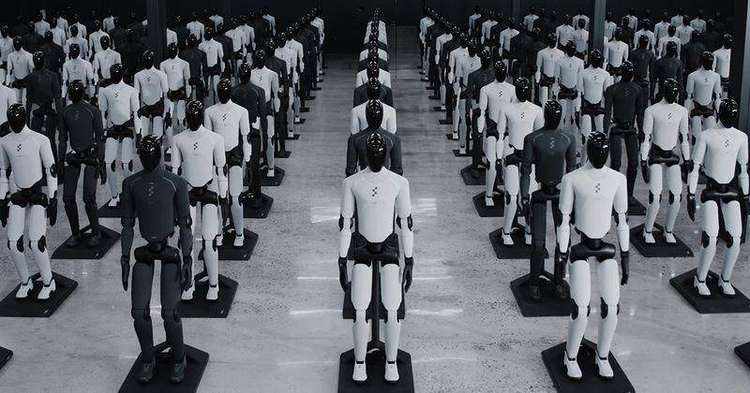
Brett Adcock has a history of raising enormous sums before his markets exist — Vettery, Archer, now Figure. A new Forbes profile asks how long the pattern holds when BMW's pilot turns out to be one robot at a time.
A new Forbes profile of Brett Adcock, summarized on October 5 by RuntimeWire, traces how the Figure AI founder has repeatedly financed ambitious businesses well before their intended markets reached scale — and argues that Figure’s $39 billion valuation makes the pattern unusually visible. Figure announced more than $1 billion in Series C commitments at a $39 billion post-money valuation on September 16, 2025, led by Parkway Venture Capital.
Forbes adds new detail on how that round came together: Figure sought $1.5 billion at a $38 billion pre-money valuation, with a term sheet reserving as much as $1.2 billion for Parkway and Align Ventures. The allocations were filled through special-purpose vehicles, with Align accepting checks as small as $100,000. Named participants include Brookfield, NVIDIA, Intel Capital, Salesforce, T-Mobile Ventures and Qualcomm Ventures — a roster that values Figure against Adcock’s endgame rather than its current output.
That endgame, as Adcock described it to Forbes: humanoids eventually numbering ‘ten or 20 billion,’ running supply chains and building homes, with a Figure robot in every home on a $500-to-$600-a-month lease. Against that, Forbes sets BMW’s account of the 2025 factory pilot: one Figure robot worked at a time, with a second unit onsite to rotate in during recharging — real deployment, but narrower than a fleet operating end to end. BotQ’s 12,000-unit annual initial capacity and the four-year 100,000-robot goal describe planned capacity and targets, not production; and the much-cited Helix 2.5 result — 56% task success versus 9% without pretraining across 30 unseen Bay Area homes — is company-reported research, not evidence of reliable commercial household service.
The profile extends the pattern to Hark, Adcock’s AI assistant startup, which raised $700 million at a $6 billion valuation in May 2026 with nothing on the market — Adcock put $100 million of his own money in first, per Forbes via TechCrunch. None of this is fraud; it is a founder selling long-term outcomes, and investors buying. But with Figure disclosing no robot revenue, unit economics or total shipments, the piece lands on the question now facing every humanoid investor: how long can financing run ahead of repeatable deployments?